CLIMATE CHANGE ADAPTATION MEASURES FOR THE CANTABRIAN BEAR
The LIFE BEARS WITH FUTURE project has worked to improve the brown bear’s adaptation to climate change in the Cantabrian Mountains, through forestry actions that have increased the availability of food for the bears and through the prevention of conflicts between bears and humans.
Fundación Oso Pardo has coordinated this project in which the Fundación Biodiversidad of the Ministry for the Ecological Transition and the Demographic Challenge and Fundación Patrimonio Natural of the Regional Government of Castilla y León have participated as partners. The regional governments of Castilla y León and the Principality of Asturias have collaborated, and the Principality of Asturias has also contributed to co-financing. Fundación Tierra Pura has collaborated in the actions and co-financed the project.
Project duration: October 2020 to March 2025

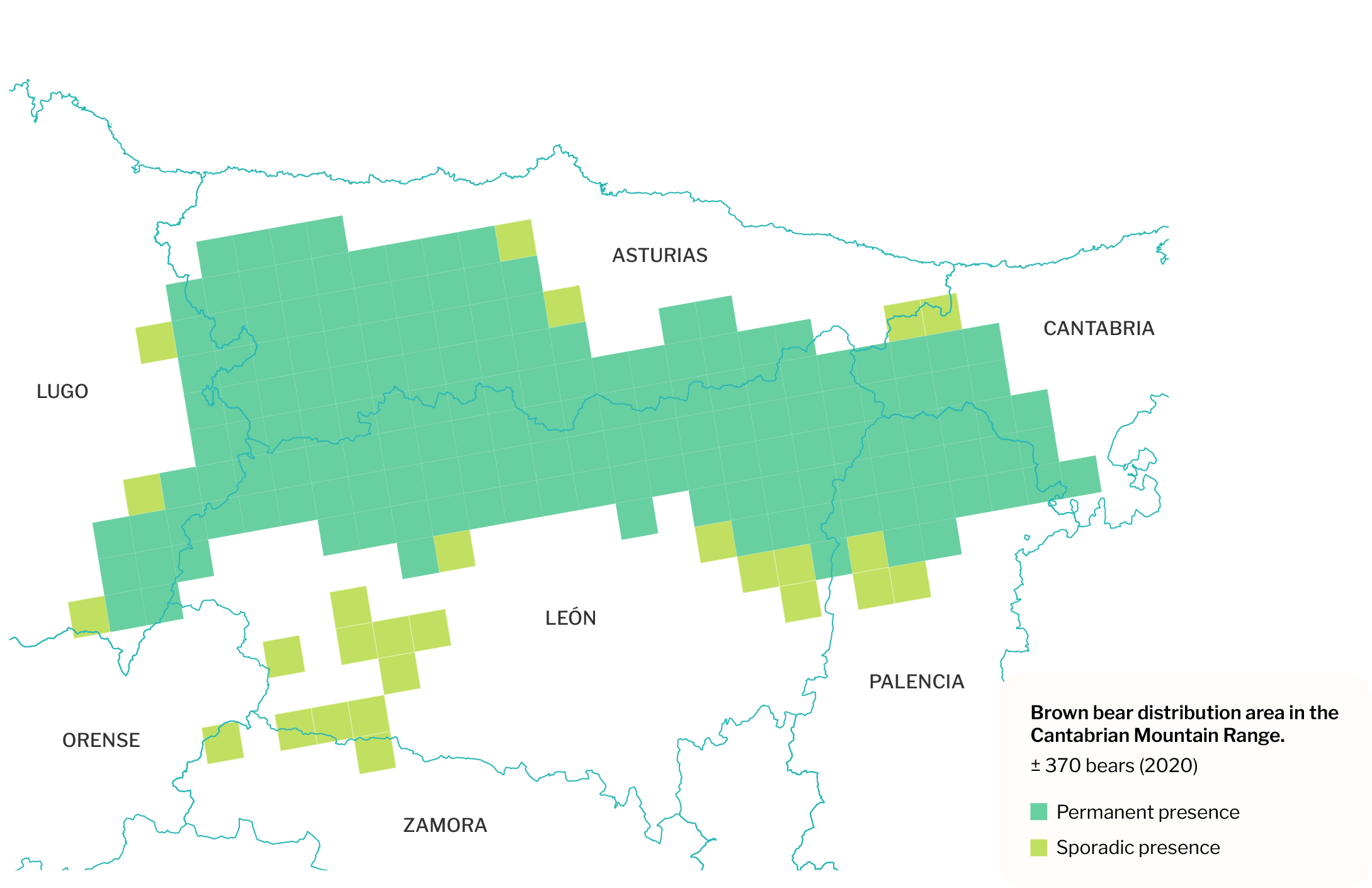
THE BROWN BEAR IN SPAIN
The brown bear is a priority species for the European Union. In Spain, the brown bear is included in the Spanish Catalogue of Threatened Species in the category of «Endangered».
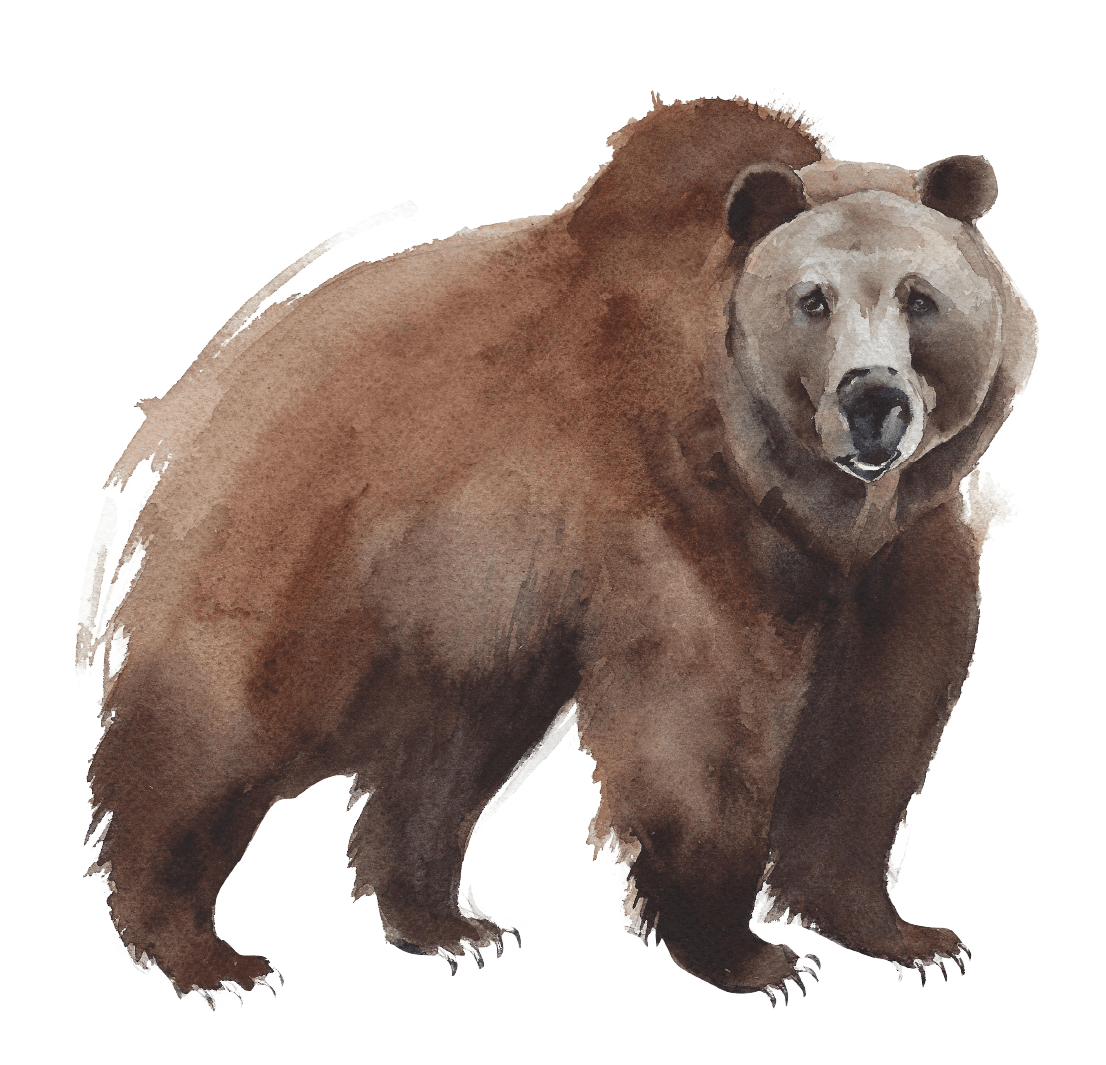
The brown bear is a priority species for the European Union. In Spain, the brown bear is included in the Spanish Catalogue of Threatened Species in the category of «Endangered».

SCIENTIFIC NAME:
Ursus arctos arctos
MEASUREMENTS
Length: 1,6 – 2m
(from tip of the nose to the base of the tail).
Tail length: 6 – 14cm
Shoulder height: 0,90 – 1m
AVERAGE WEIGHT:
Males: they can exceed 200 Kg.
Females: 100 – 150Kg.
Cubs: about 350 g at birth.
LIFESPAN
25 – 30 years in the wild.
(maximum known: 34 years in the wild and 47 years in captivity).
SENSES
Eyesight: poor.
Hearing: acute.
Smell: excellent and finely tuned.
(the most developed and important sense for survival).
SCIENTIFIC NAME:
Ursus arctos arctos
MEASUREMENTS
Length: 1,6 – 2m
(from tip of the nose to the base of the tail).
Tail length: 6 – 14cm
Shoulder height: 0,90 – 1m
AVERAGE WEIGHT:
Males: they can exceed 200 Kg.
Females: 100 – 150Kg.
Cubs: about 350 g. at birth.
LIFESPAN
25 – 30 years in the wild.
((maximum known: 34 years in the wild and 47 years in captivity).
SENSES
Eyesight: poor.
Hearing: acute.
Smell: excellent and finely tuned.
(the most developed and important sense for survival).
HOW CLIMATE CHANGE AFFECTS BROWN BEARS IN THE CANTABRIAN MOUNTAINS
INCREASINGLY SHORTER, MILDER AND MORE IRREGULAR WINTERS
*IPCC Climate Models

IMPACT ON IMPORTANT FOOD SPECIES
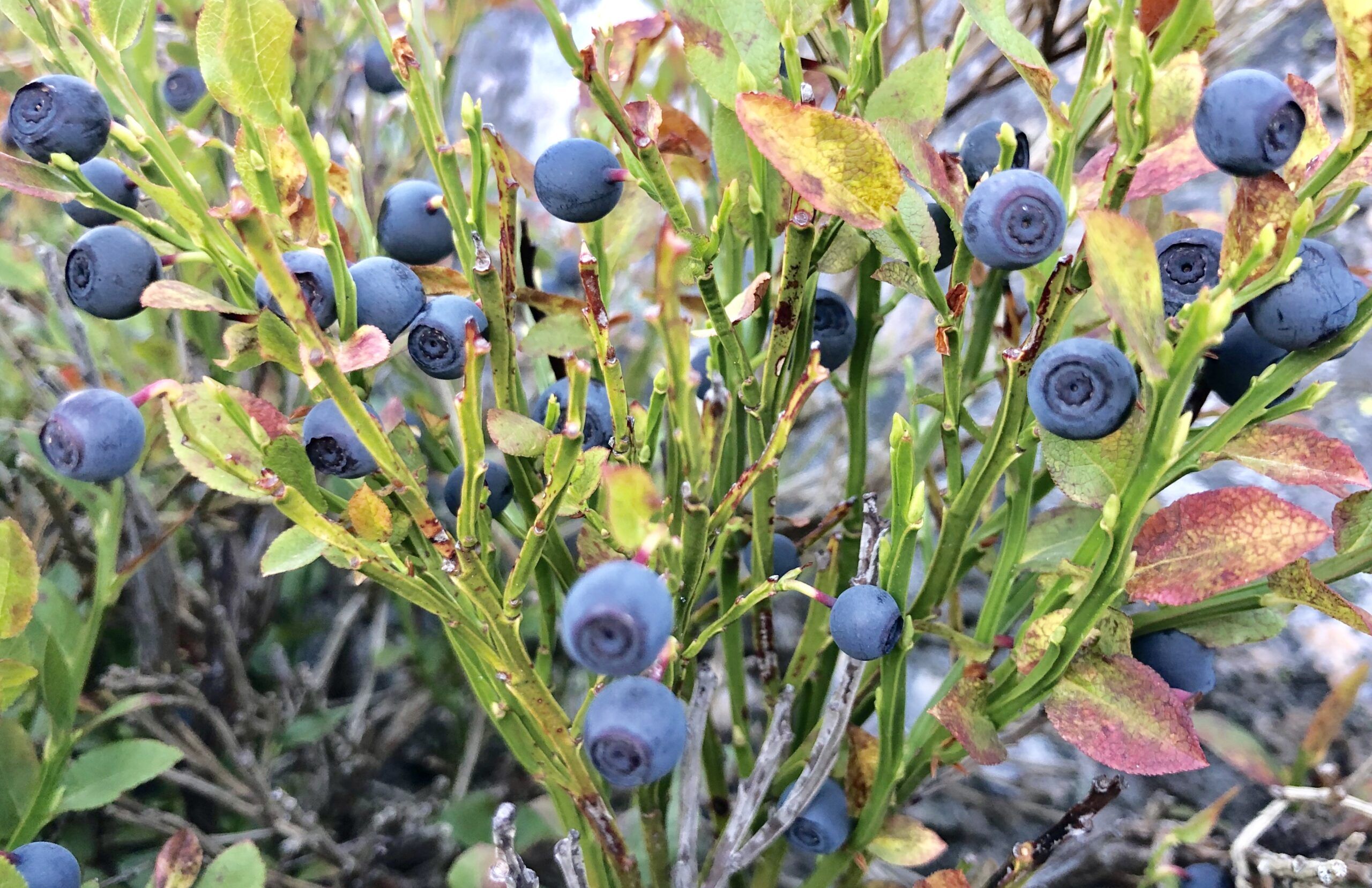
IMPACT ON IMPORTANT FOOD SPECIES
SHORTENING BEAR HIBERNATION PERIOD
Ambient temperature is a key factor in triggering hibernation. Global warming is leading to bears hibernating for less time or not at all.
It is therefore to be expected that more bears will be active in winter, increasing the chances of encounters with people. Winter leisure activities are compatible with the presence of bears. What matters is knowing what to do and what not to do to avoid incidents.
SHORTENING BEAR HIBERNATION PERIOD
Ambient temperature is a key factor in triggering hibernation. Global warming is leading to bears hibernating for less time or not at all.
It is therefore to be expected that more bears will be active in winter, increasing the chances of encounters with people. Winter leisure activities are compatible with the presence of bears. What matters is knowing what to do and what not to do to avoid incidents.
The animated video ‘Tips for walking in the mountains of the brown bear’, produced within the framework of LIFE, has been edited in Spanish, English, Italian, Greek, French, Galician and Catalan and has been broadcast nationally and internationally.
LARGER, MORE VIRULENT AND MORE DEVASTATING FIRES
Bears feed and shelter in high-quality natural woodlands that are flammable under climate change scenarios. Rising temperatures and prolonged droughts are fuelling large, uncontrollable fires and lengthening the fire season. These fires pose risks not only for bears, but also for other species and for resources for local communities.
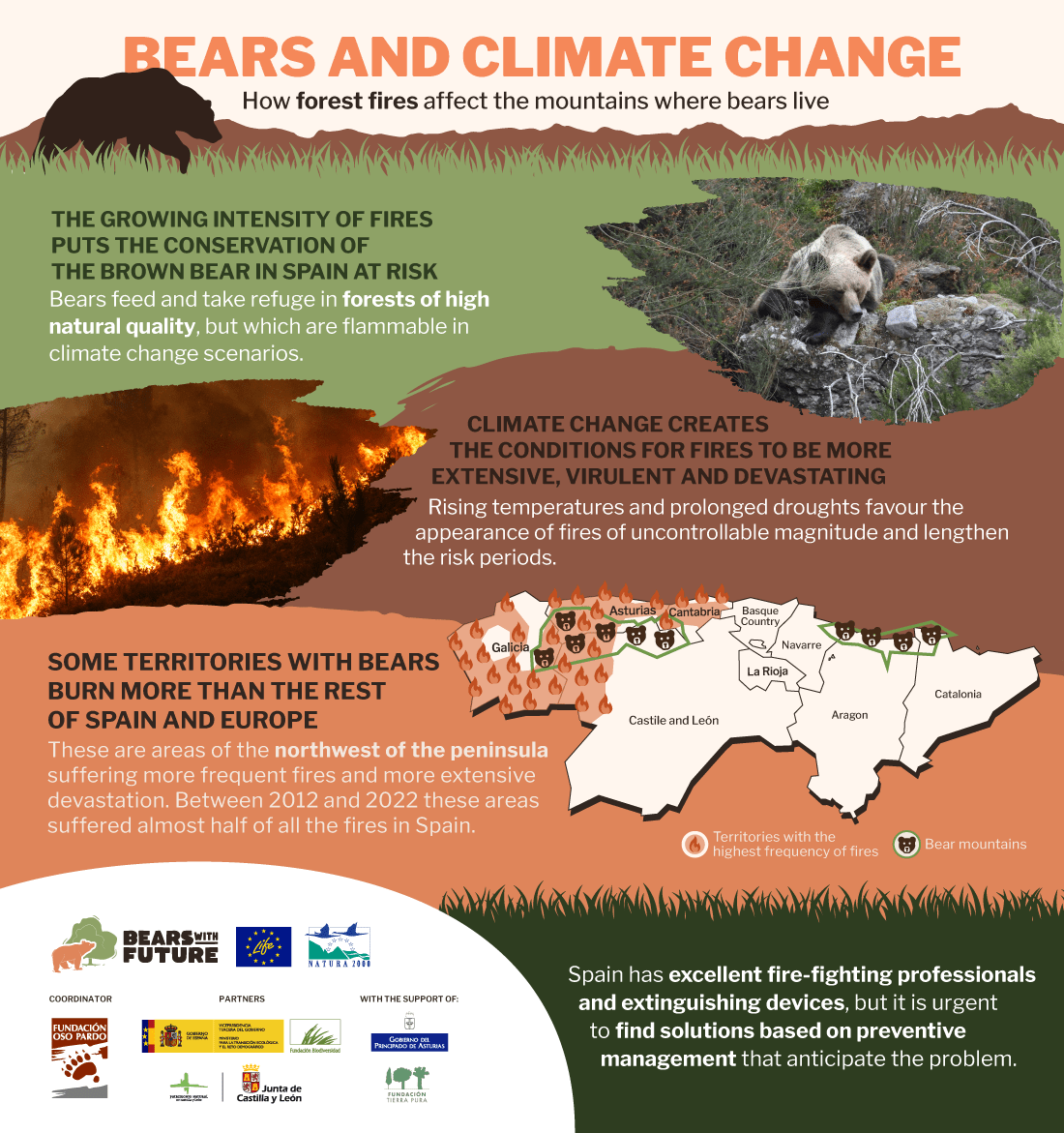
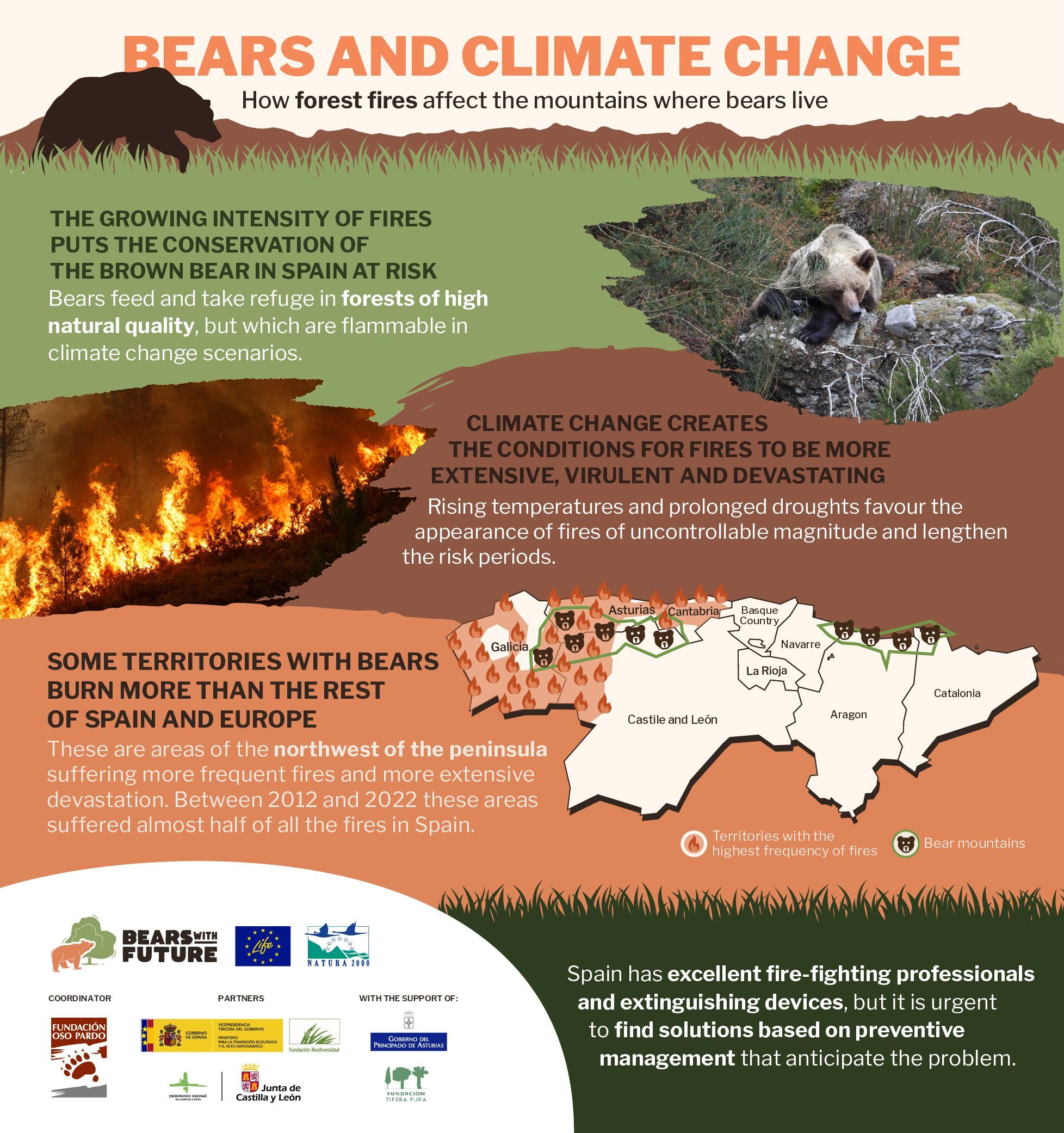
LARGER, MORE VIRULENT AND MORE DEVASTATING FIRES
Bears feed and shelter in high-quality natural woodlands that are flammable under climate change scenarios. Rising temperatures and prolonged droughts are fuelling large, uncontrollable fires and lengthening the fire season. These fires pose risks not only for bears, but also for other species and for resources for local communities.
THE ACTIONS OF LIFE BEARS WITH FUTURE
THE ACTIONS OF LIFE BEARS WITH FUTURE
RESEARCH
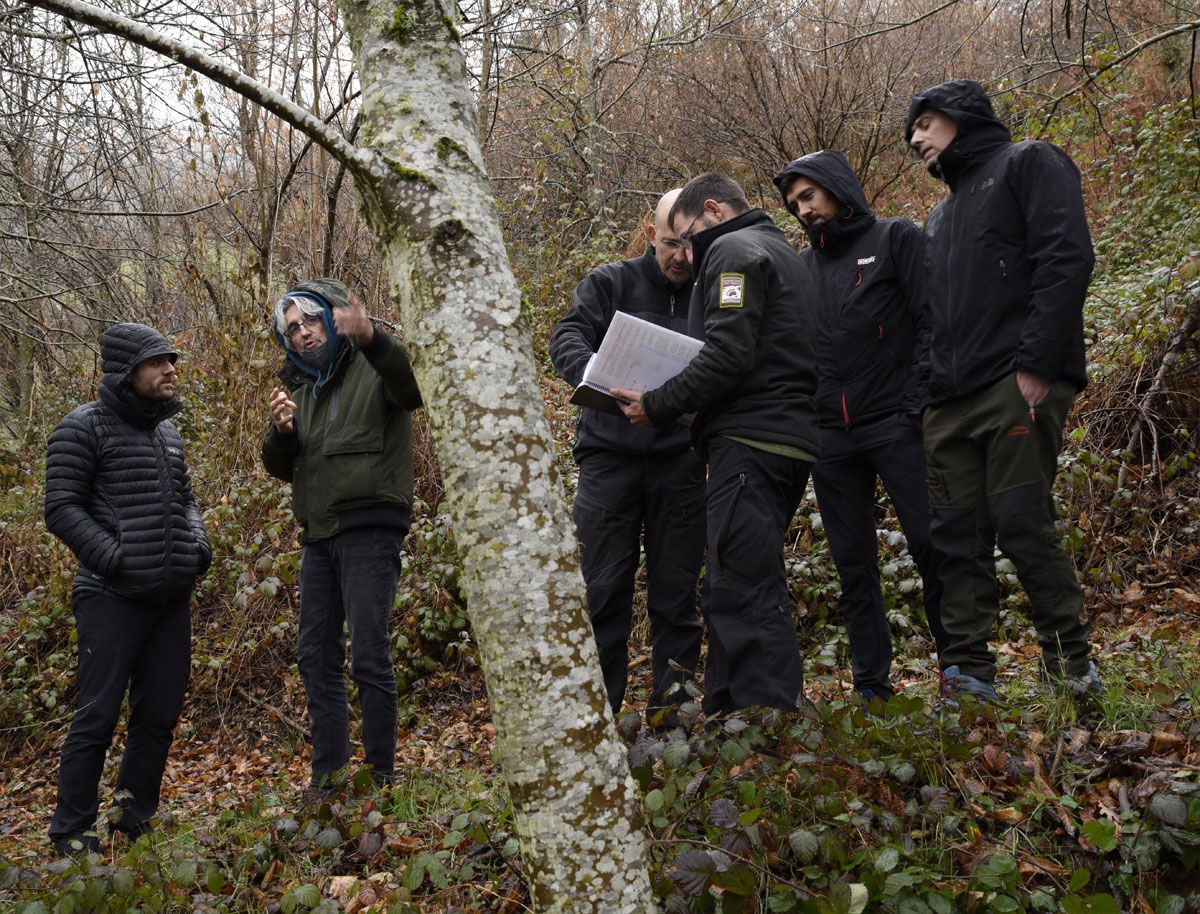
Several preliminary studies have been carried out in the framework of LIFE BEARS WITH FUTURE. These studies have made it possible to design strategies based on scientific evidence and increase the success of the project’s actions. The project has drawn on the expertise of the Joint Institute for Biodiversity Research (University of Oviedo, CSIC, Principality of Asturias), the University of Cantabria, the University of León, the University of Santiago de Compostela, the University of Vigo, the University of Valladolid and the University of Extremadura.
Among other work, a climate change vulnerability analysis of food sources and critical areas for the bear was carried out, and a study on habitat suitability for fruit-producing species of interest to the Cantabrian brown bear under climate change scenarios.
FORESTRY ACTIONS
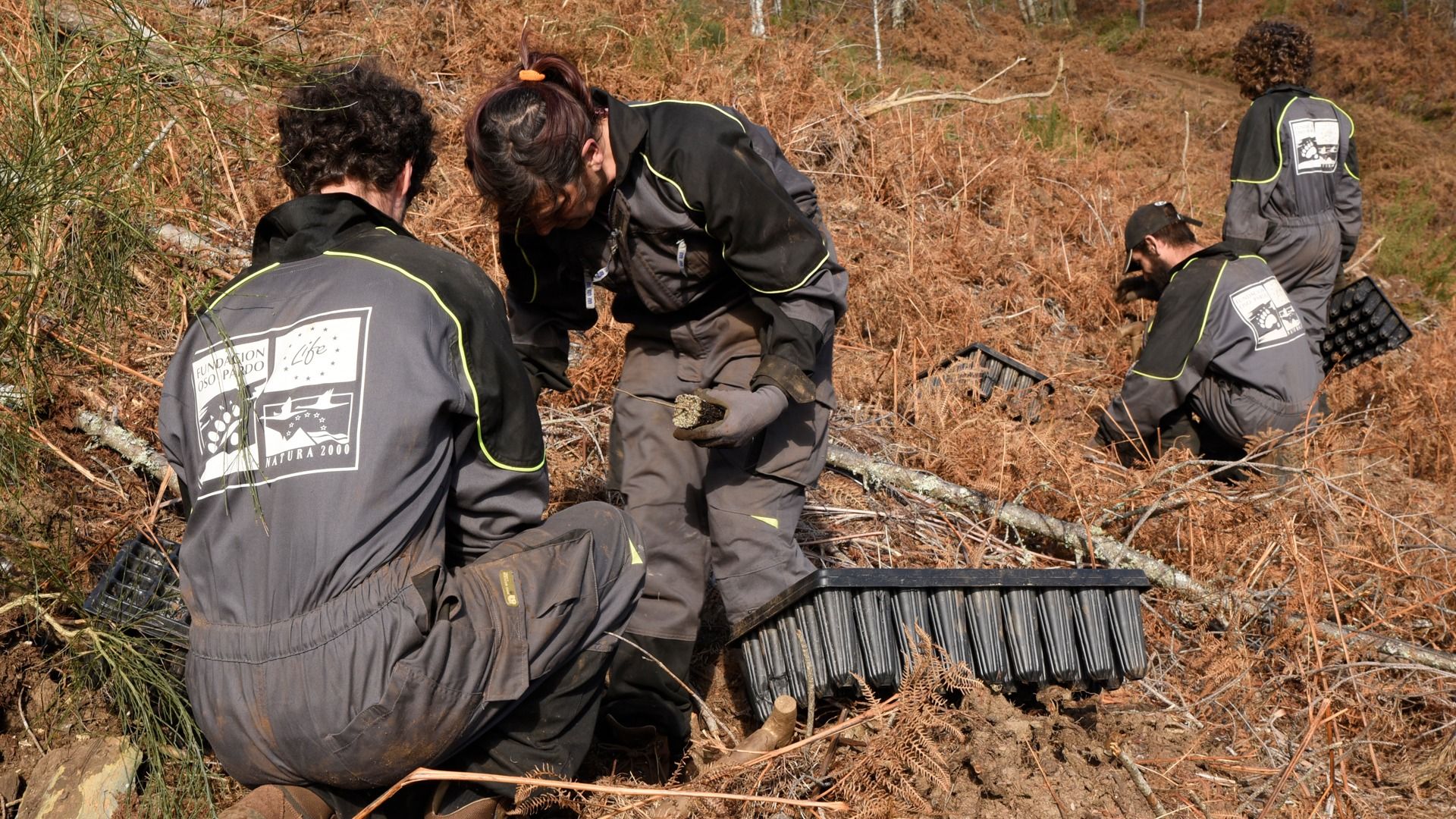
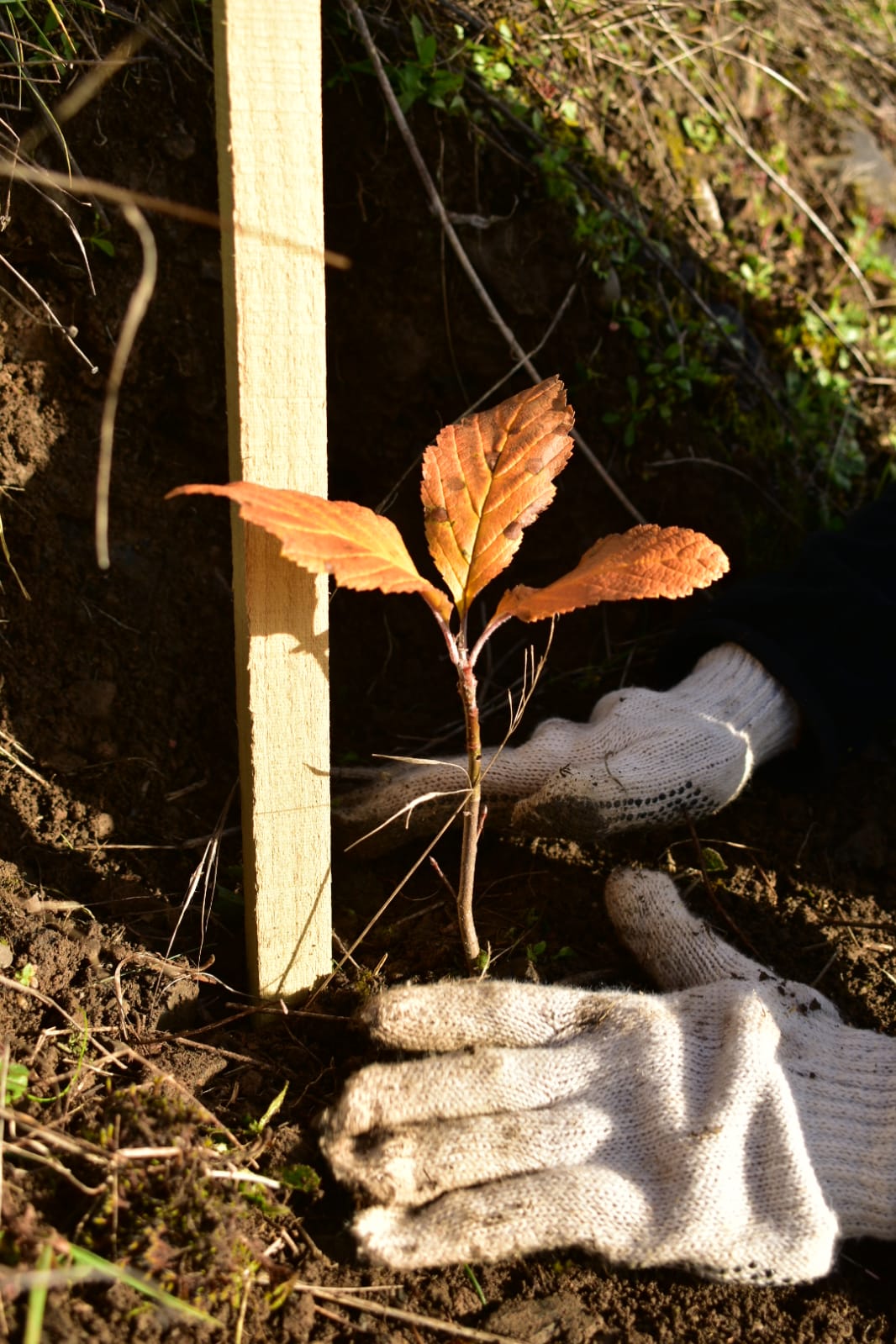
To offset the reduced fruiting that climate change causes in species that the bear feeds on, the LIFE BEARS WITH FUTURE project has carried out a set of forestry actions. These included planting climate-adapted fruit trees and shrubs, silvicultural work in oak woods, and demonstration actions in mixed beech-oak forests.

39
STEWARDSHIP AGREEMENTS WITH LANDOWNERS

38
PURCHASE OF LAND
(20,10 HA)

13
PURCHASE ABANDONED CHESTNUT FORESTS
(3,93 HA)
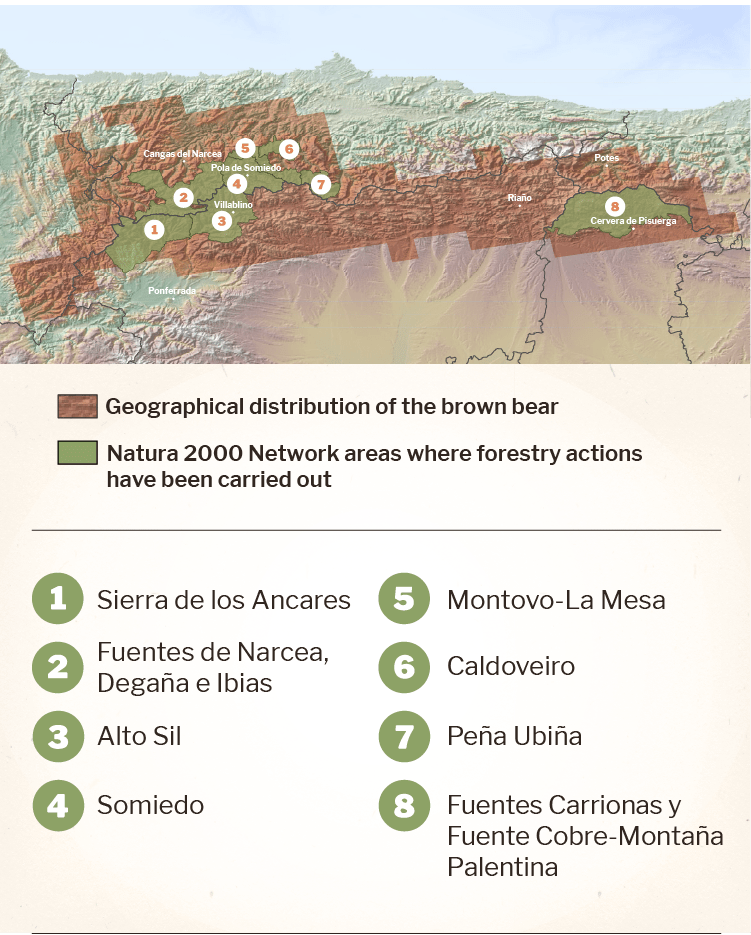
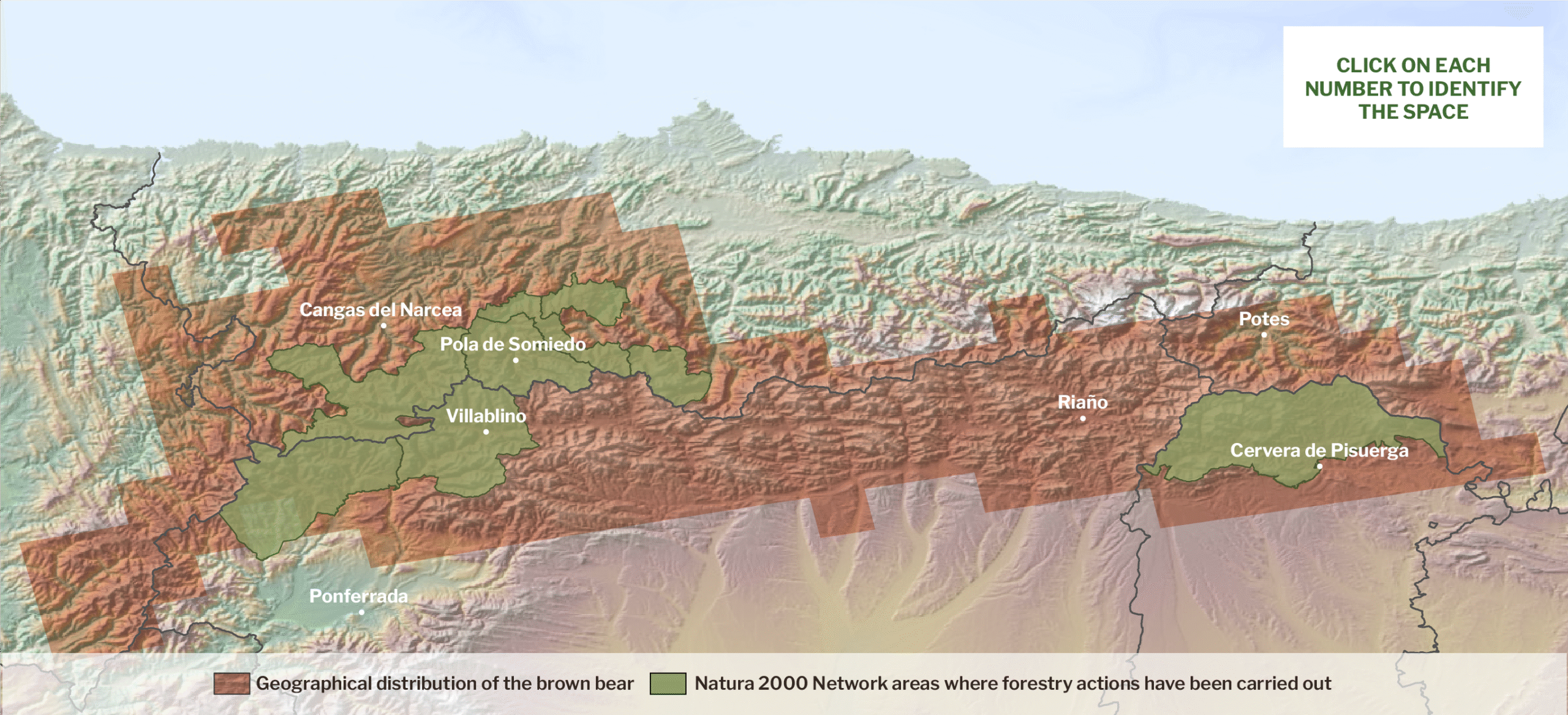
Work was carried out at eight Natura 2000 sites:
→ Ubiña, Caldoveiro, Montovo-La Mesa, Fuentes del Narcea, Degaña e Ibias y Somiedo (Asturias)
→ Alto Sil y Sierra de los Ancares (León)
→ Fuentes Carrionas y Fuente Cobre-Montaña Palentina (Palencia)


FRUIT GROVES
-
Purchase of land and signing of stewardship agreements with landowners.
-
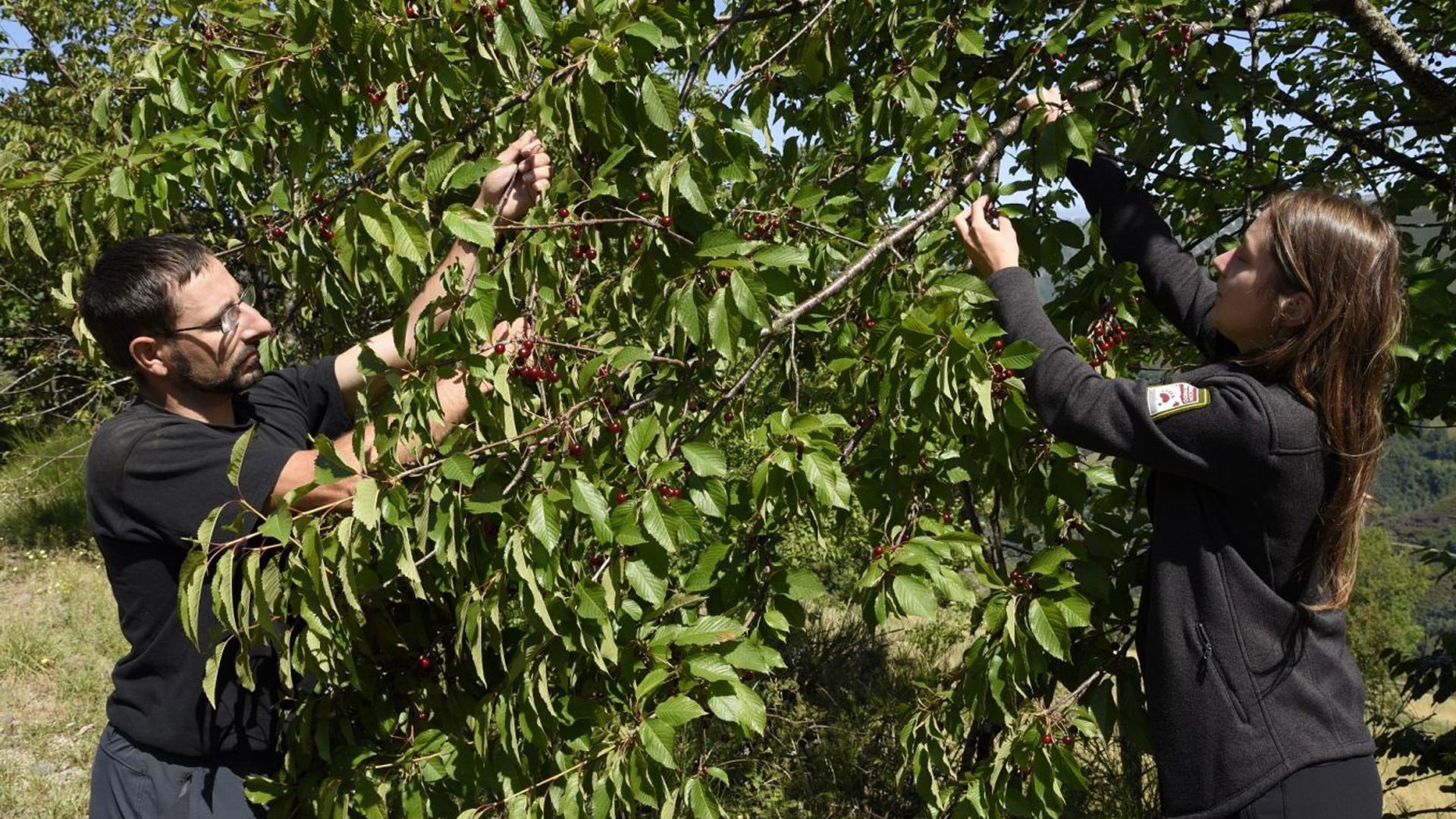
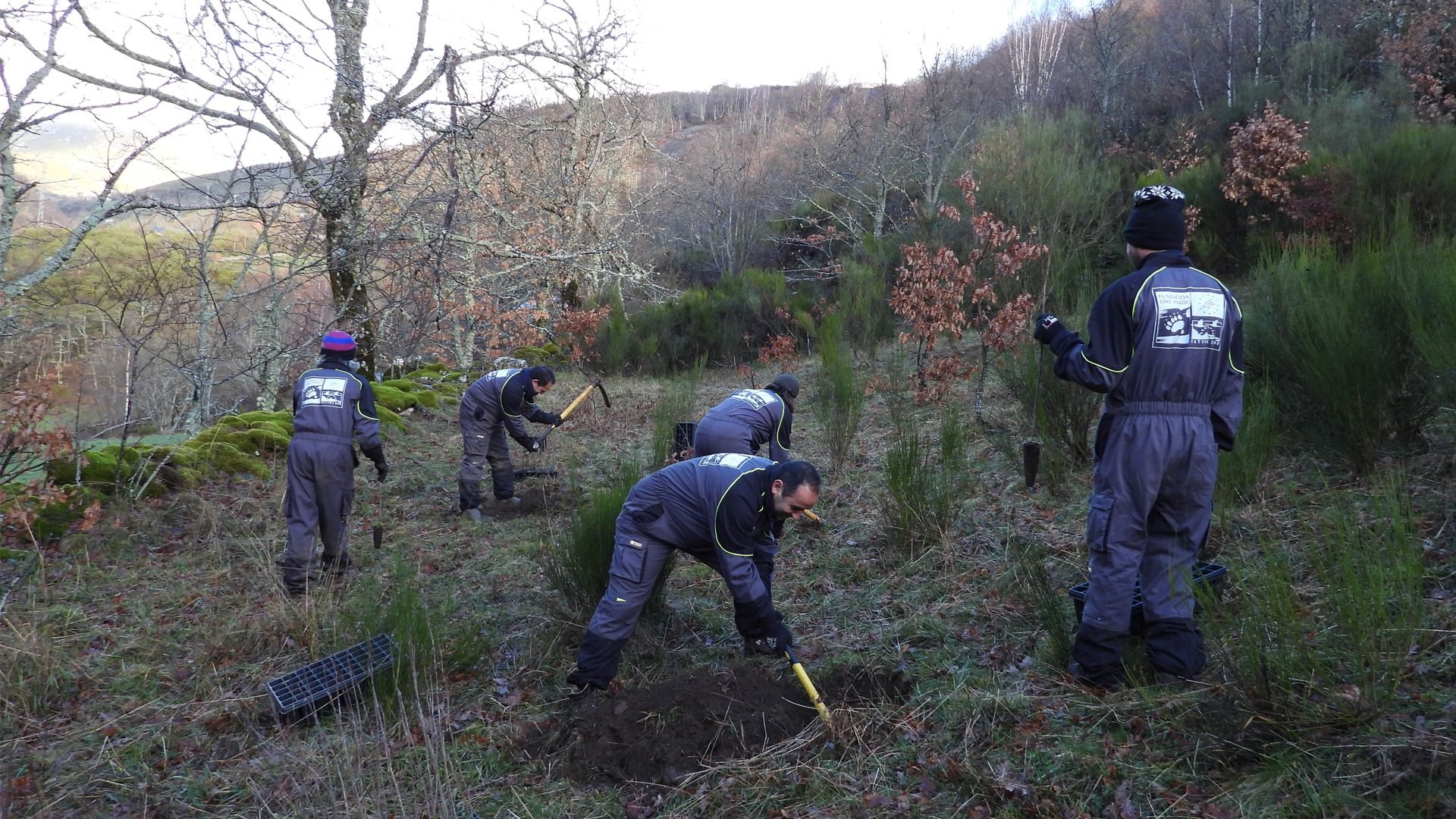
Fundación Oso Pardo field teams gathered fruits from cherry, alder
buckthorn, whitebeam, strawberry tree, and other native species. All seeds
were certified by the authorities, then cleaned and propagated in nurseries. -
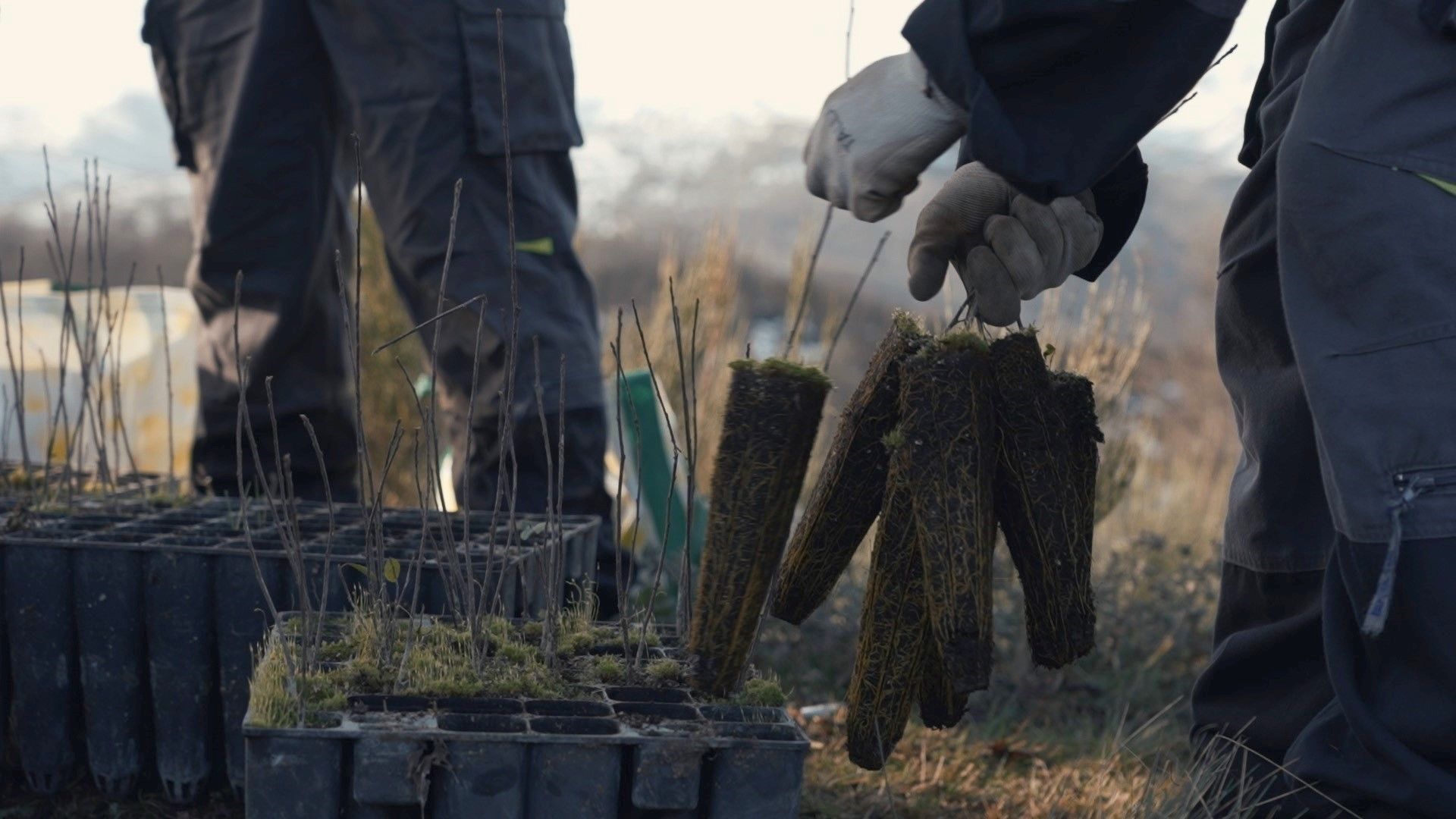
In the nurseries, the plant is produced from the collected seeds.
-
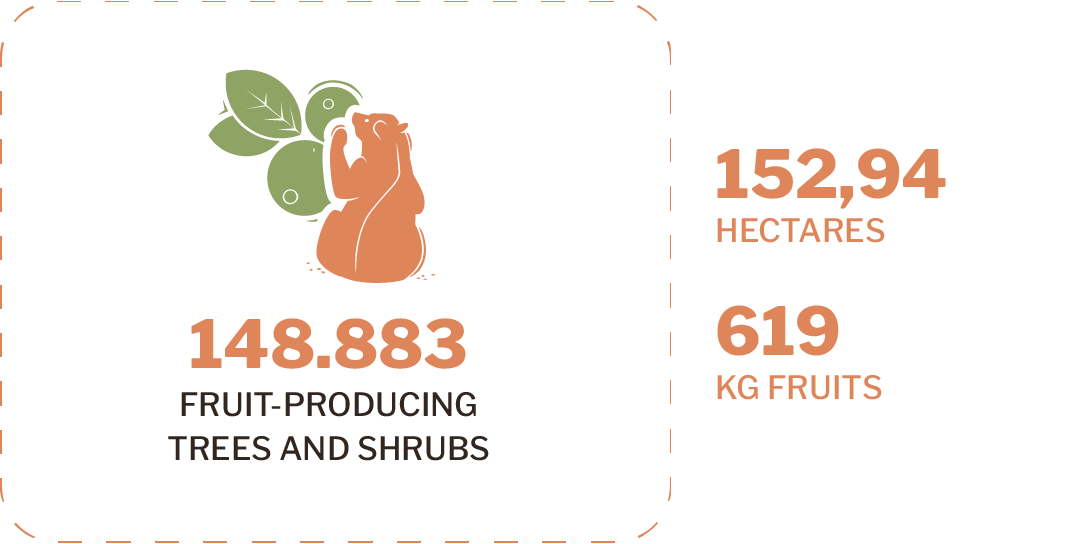
Planting of 148.883 fruit-producing trees and shrubs for bears in groves in locations suitable for climate change scenarios.
FRUIT GROVES
-
Purchase of land and signing of stewardship agreements with landowners.
-
Fundación Oso Pardo field teams gathered fruits from cherry, alder
buckthorn, whitebeam, strawberry tree, and other native species. All seeds
were certified by the authorities, then cleaned and propagated in nurseries. -
In the nurseries, the plant is produced from the collected seeds.
-
Planting of 148.883 fruit-producing trees and shrubs for bears in groves in locations suitable for climate change scenarios.
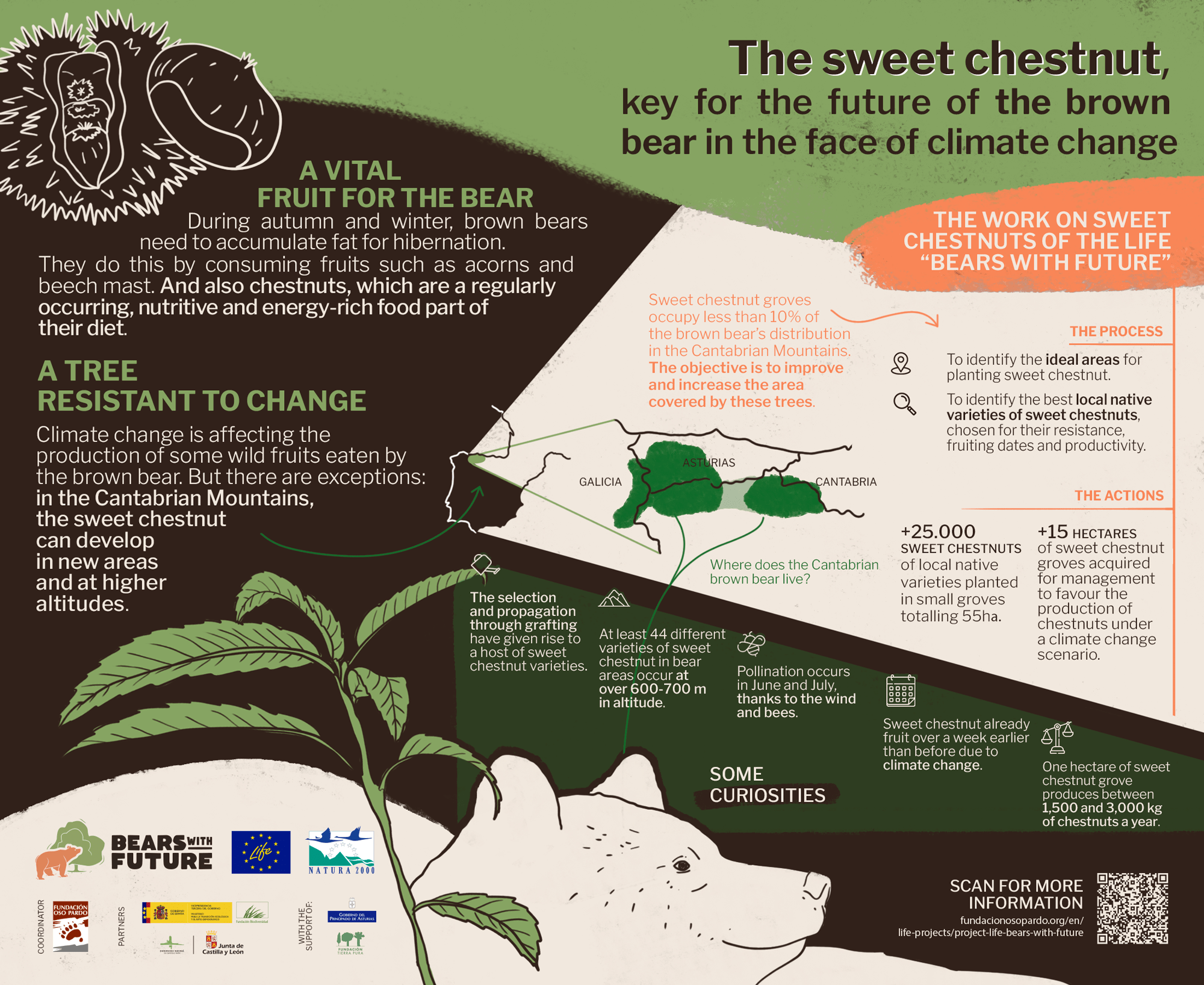
THE CHESTNUT TREE, KEY FOR THE FUTURE OF THE BROWN BEAR IN THE FACE OF CLIMATE CHANGE
-
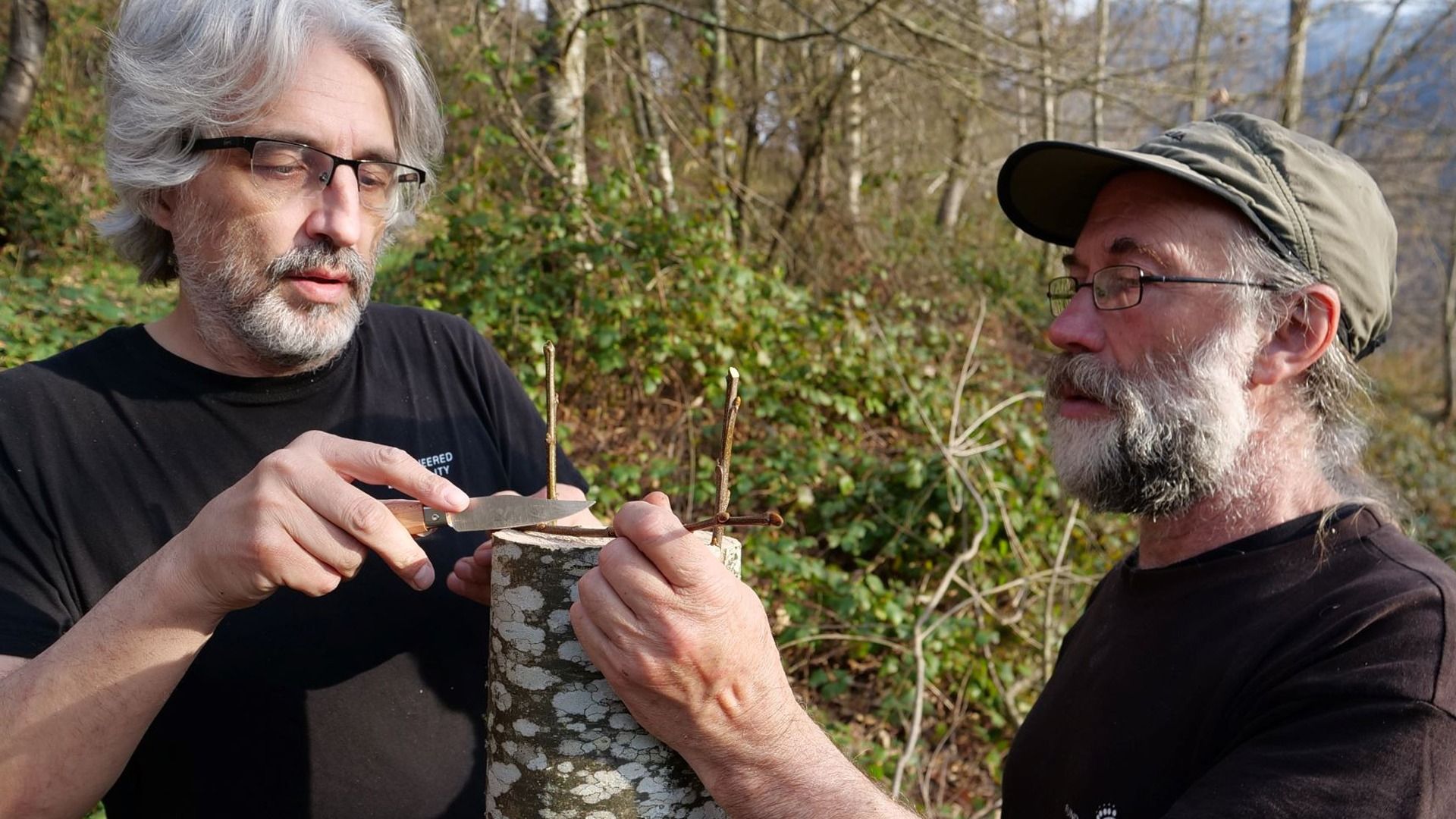
Chestnuts are a nutritious, energy-rich food for bears. The chestnut tree is resilient to climate change, its annual fruit production is steady, and it has economic value for local communities.
-
19,559 chestnut trees have been produced and planted, 21.6% grafted with local varieties
THE CHESTNUT TREE, KEY FOR THE FUTURE OF THE BROWN BEAR IN THE FACE OF CLIMATE CHANGE
-
Chestnuts are a nutritious, energy-rich food for bears. The chestnut tree is resilient to climate change, its annual fruit production is steady, and it has economic value for local communities.
-
19,559 chestnut trees have been produced and planted, 21.6% grafted with local varieties
DEMONSTRATION FOREST NETWORK
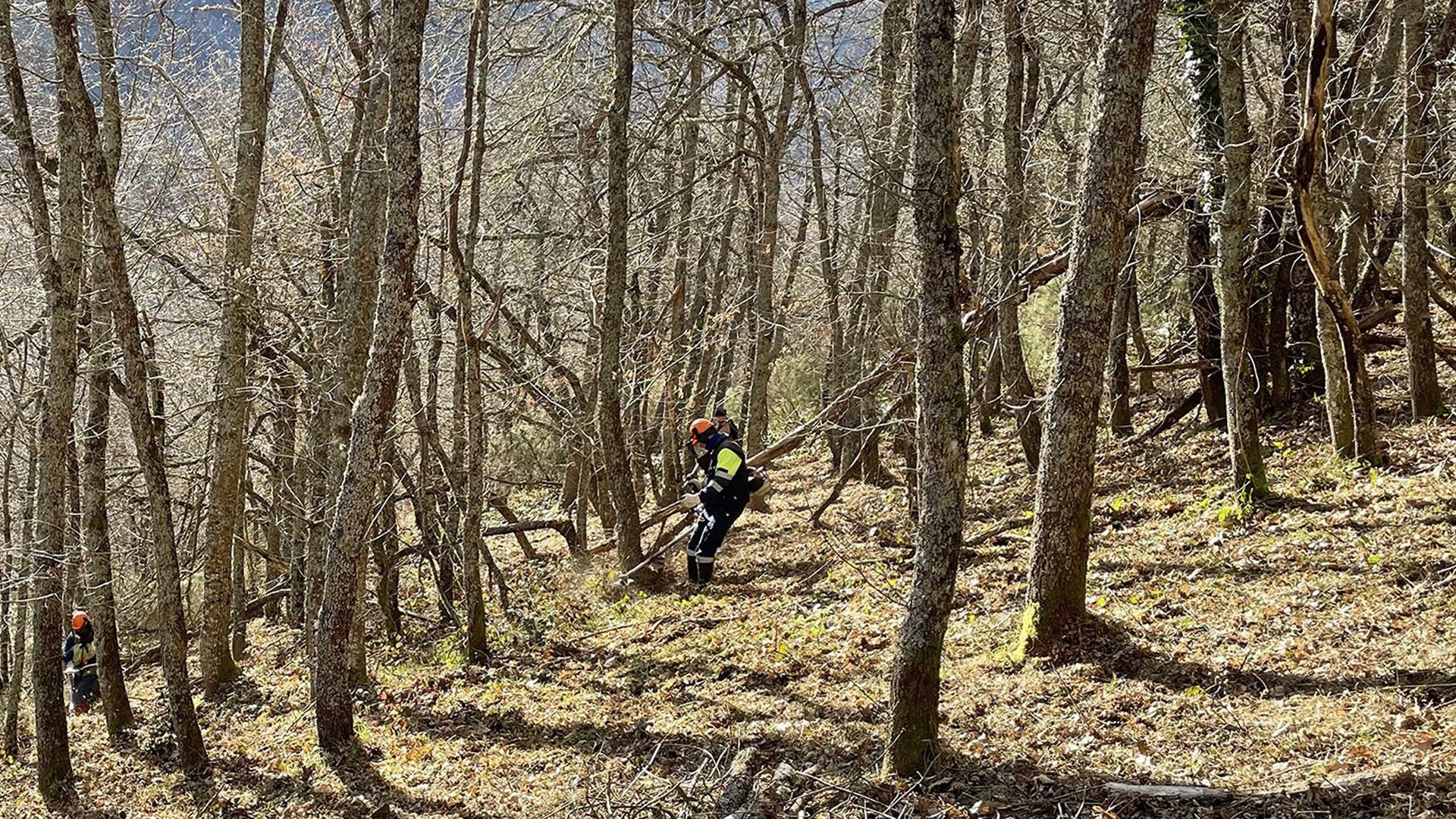
The Fundación Patrimonio Natural of the Regional Government of Castilla y León has carried out silvicultural interventions in 13,7 hectares to improve natural regeneration and fruit production. The interventions consisted of thinning from above and below to favour selected trees.
>
6 Interpretative trails and 5 guided visits were organised for the public (115 participants).
The interpretative itineraries can also be followed virtually on the web site of the
Network of Demonstration Forests.
Follow the virtual tour through one of the demonstration forests, Montecillo y Quemado,
in Montaña Palentina:
DEMONSTRATION FOREST NETWORK
The Fundación Patrimonio Natural of the Regional Government of Castilla y León has carried out silvicultural interventions in 13,7 hectares to improve natural regeneration and fruit production. The interventions consisted of thinning from above and below to favour selected trees.
6 Interpretative trails and 5 guided visits were organised for the public (115 participants). The interpretative itineraries can also be followed virtually on the web site of the Network of Demonstration Forests.
Follow the virtual tour through one of the demonstration forests, Montecillo y Quemado, in Montaña Palentina:
Information and environmental education actions for professionals in the sector and university students: the Fundación Patrimonio Natural of the Regional Government of Castilla y León has carried out 129 workshops, in which 5,415 students have participated. And the Brown Bear Foundation has carried out 10 workshops with 620 students.
317 volunteers have taken part in 8 activities such as building pollinator hotels, planting fruit trees, collecting seeds, etc.
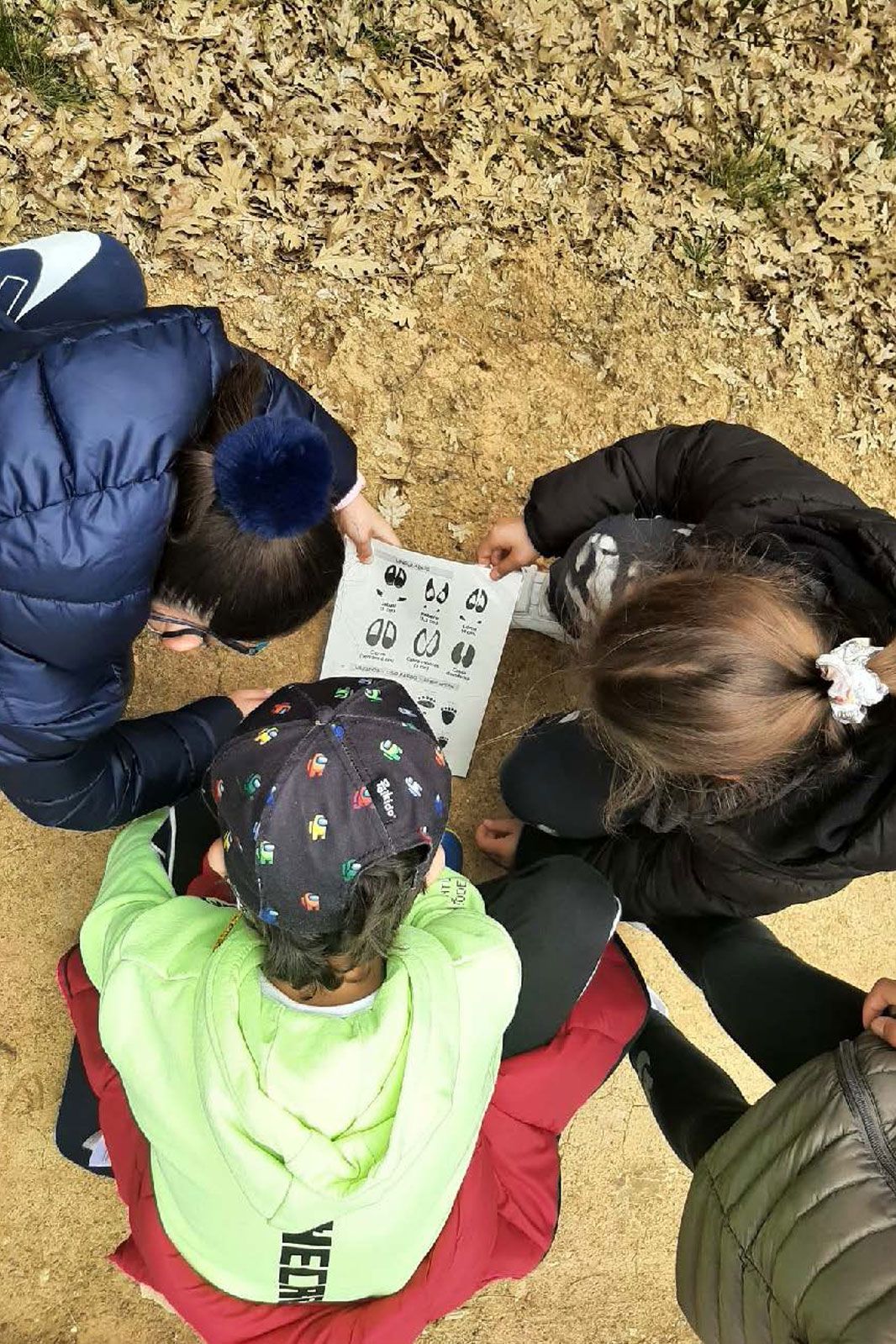
Information and environmental education actions for professionals in the sector and university students: the Fundación Patrimonio Natural of the Regional Government of Castilla y León has carried out 129 workshops, in which 5,415 students have participated. And the Brown Bear Foundation has carried out 10 workshops with 620 students.
317 volunteers have taken part in 8 activities such as building pollinator hotels, planting fruit trees, collecting seeds, etc.
PREVENTION OF WINTER CONFLICTS AND SUPPORT FOR COEXISTENCE WITH BEARS
The project has developed an extensive information campaign in partnership with Fundación Biodiversidad of the Ministry for the Ecological Transition and the Demographic Challenge. Awareness activities took place across the Cantabrian Mountains, reaching a wide range of winter mountain users, and used multiple communication formats.
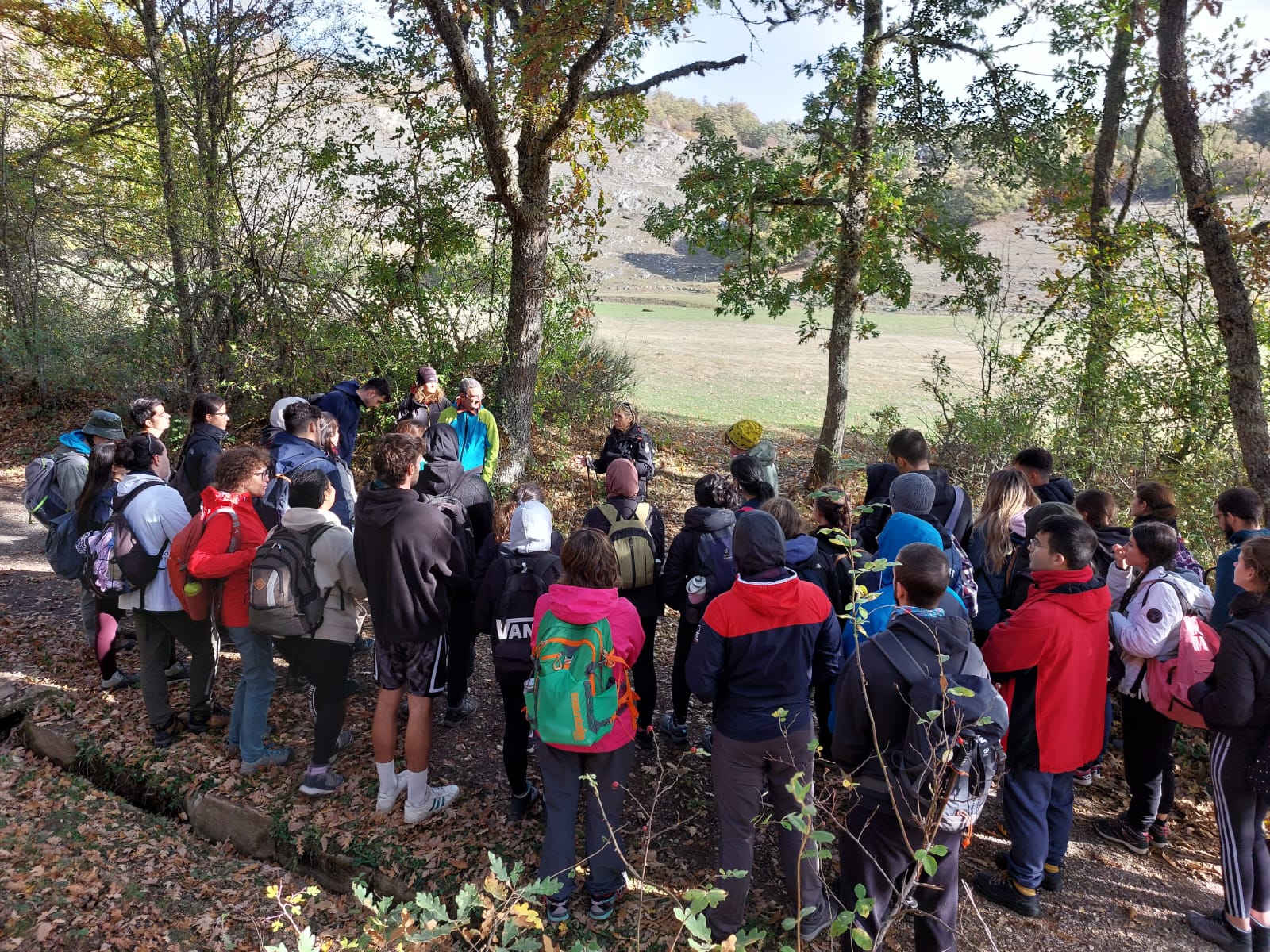
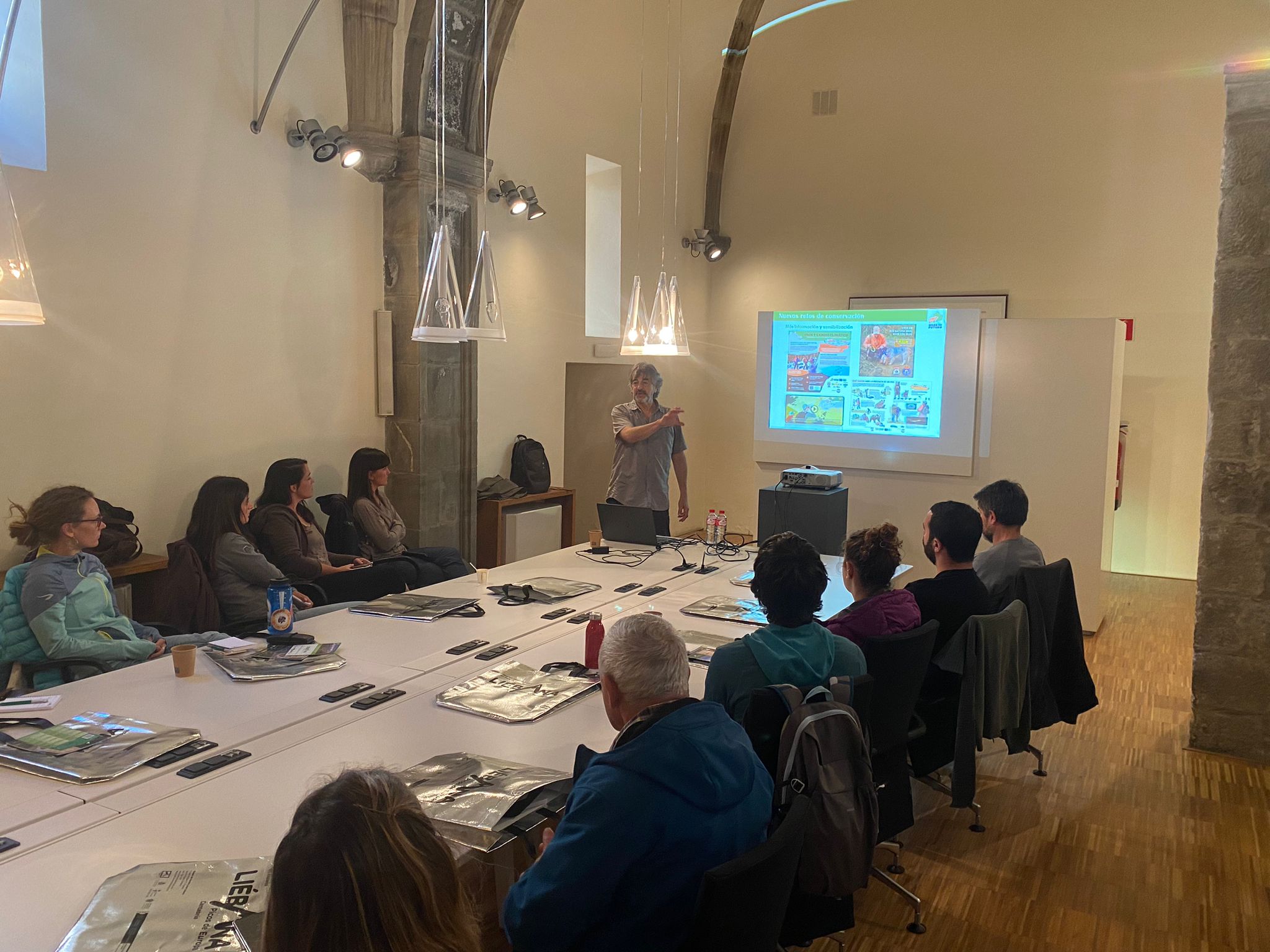
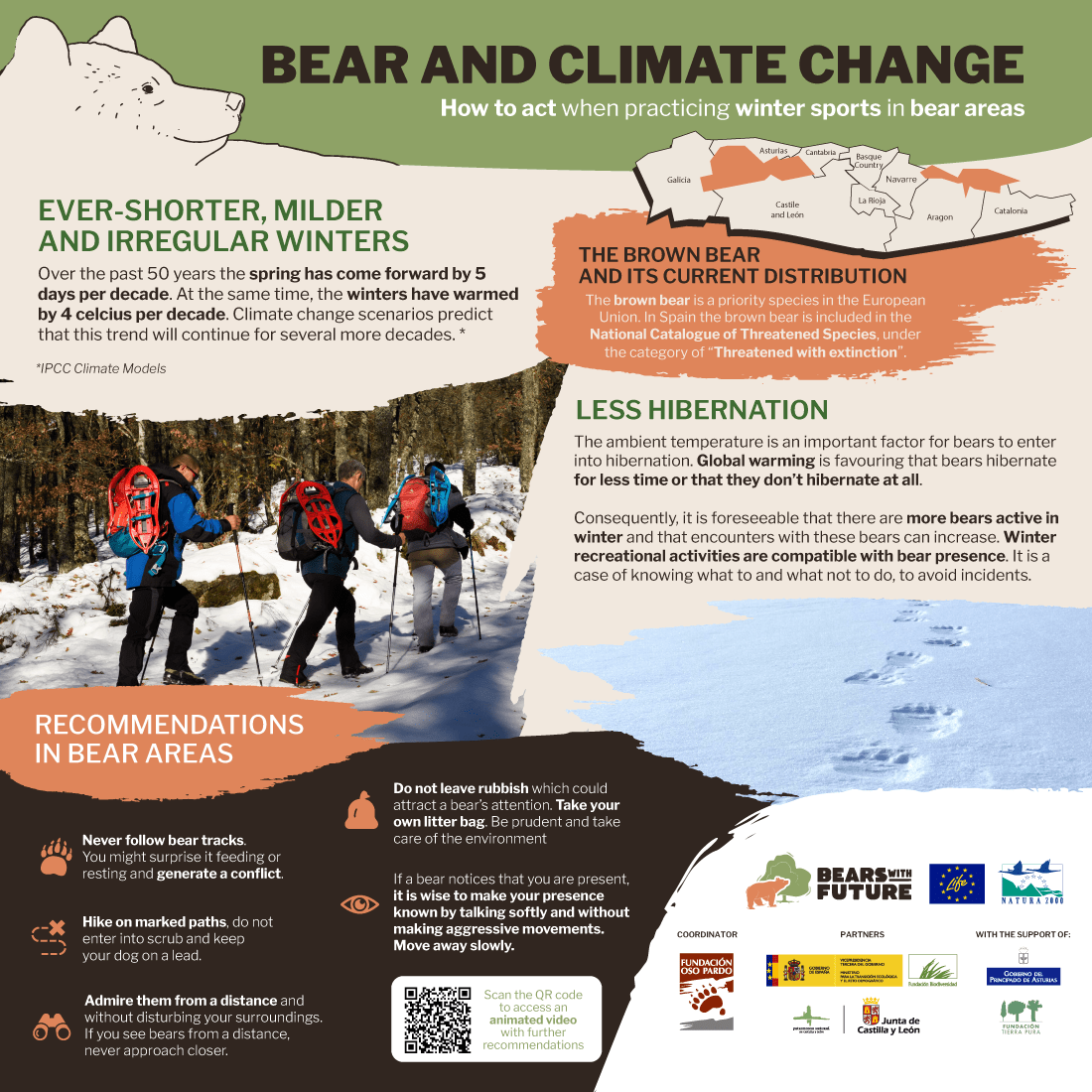
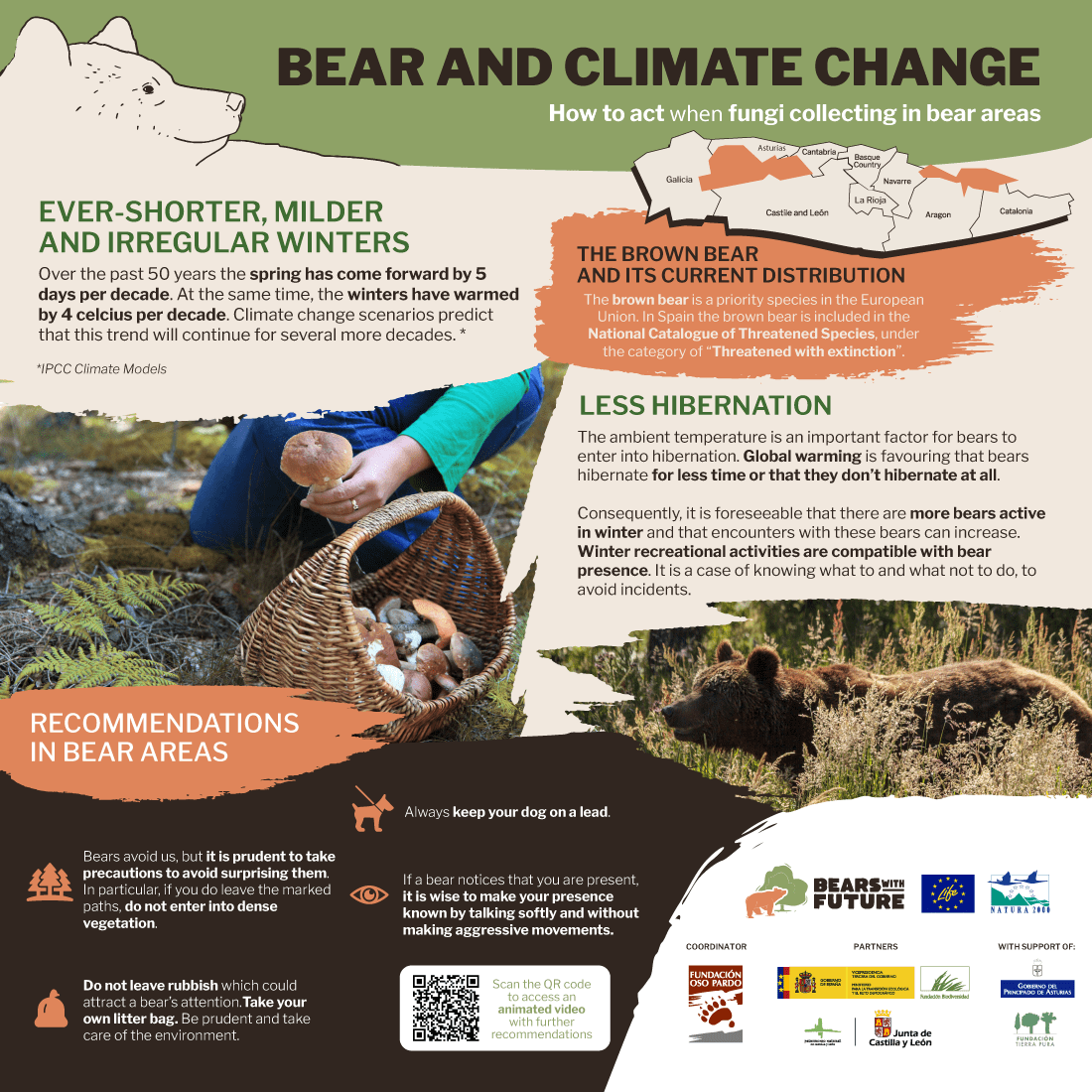
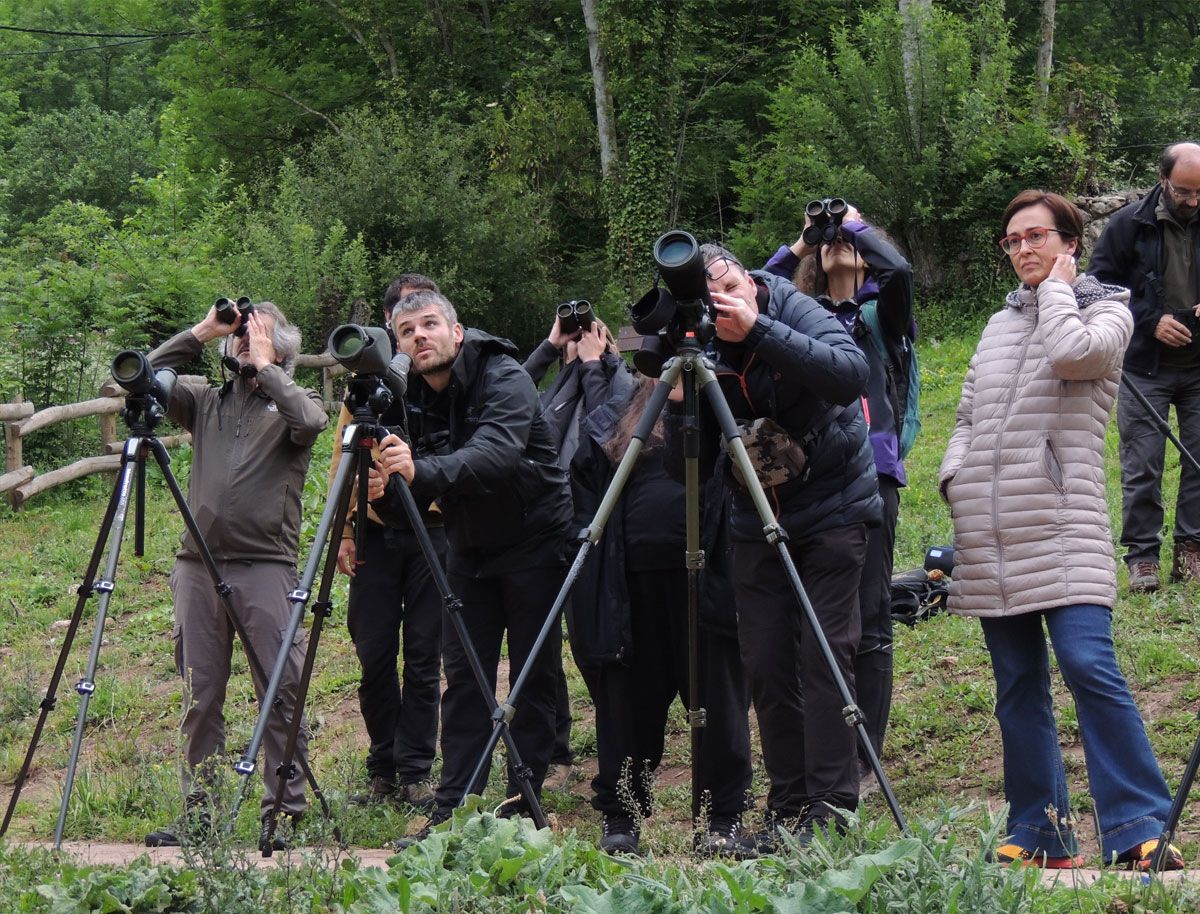
Actions aimed at mountaineers and other visitors to bear habitats. Agreements have been signed with the mountain sports federations of Galicia, Asturias, Cantabria and Castilla y León, with the main mycological associations in these regions and with the Spanish Association of Nature Photographers (AEFONA). More than 83 events have been held, consisting of talks and guided walks offering advice on how to avoid conflict with bears. These events reached 3,029 people.
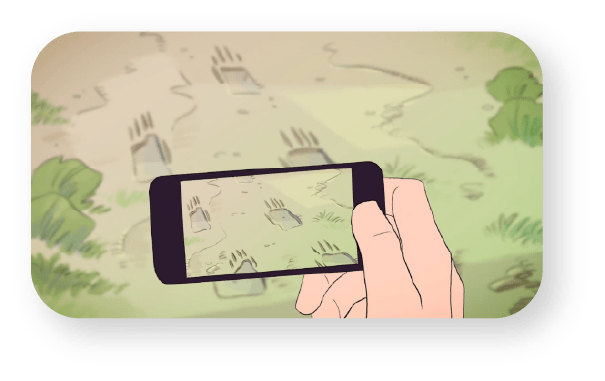
MAIN RECOMMENDATIONS FOR BEAR HABITATS
Never follow a bear’s tracks. You might startle it while feeding or resting and provoke a conflict.
Never follow a bear’s tracks. You might startle it while feeding or resting and provoke a conflict.
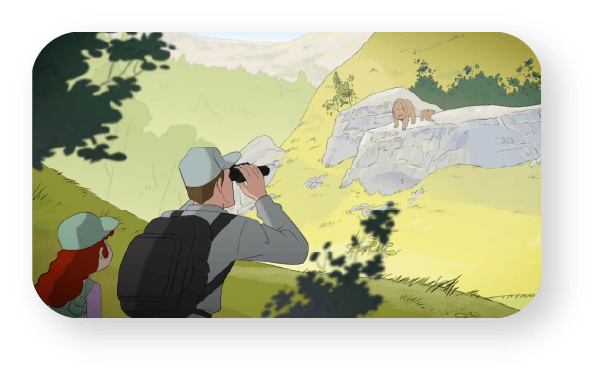
Admire them from a distance.. and without disturbing their environment. If you see bears from afar, never approach them.
Admire them from a distance.. and without disturbing their environment. If you see bears from afar, never approach them.
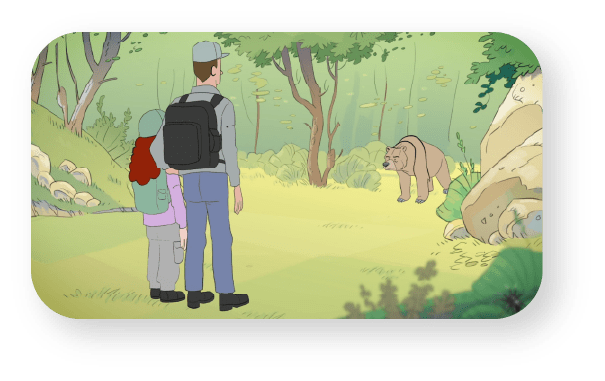
If a bear becomes aware of your presence, it is advisable to make yourself heard by speaking softly and avoiding gestures.
If a bear becomes aware of your presence, it is advisable to make yourself heard by speaking softly and avoiding gestures.
Stay on marked trails, avoid the undergrowth, and keep dogs on a lead.
Stay on marked trails, avoid the undergrowth, and keep dogs on a lead.
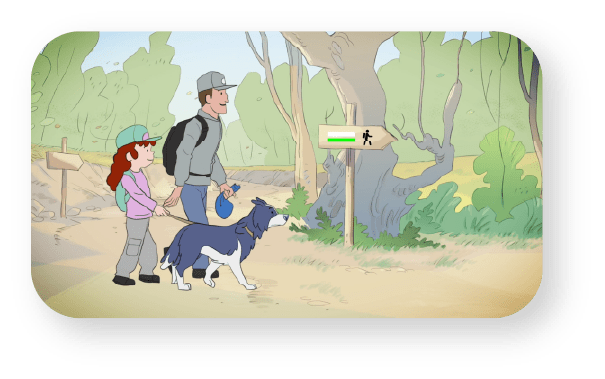
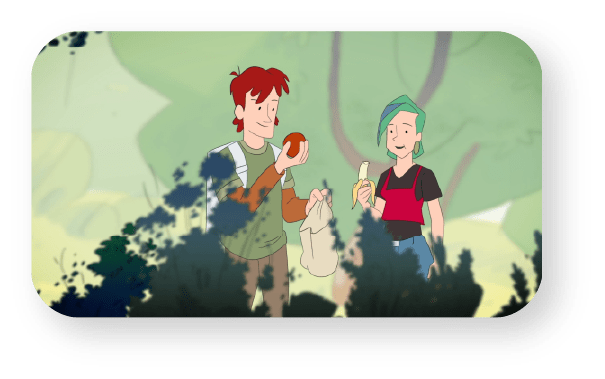
Do not leave litter that might attract the bears’ attention. , Take your own litter bag. Be cautious and respect the environment.
Do not leave litter that might attract the bears’ attention. , Take your own litter bag. Be cautious and respect the environment.
WORKSHOPS FOR HUNTERS
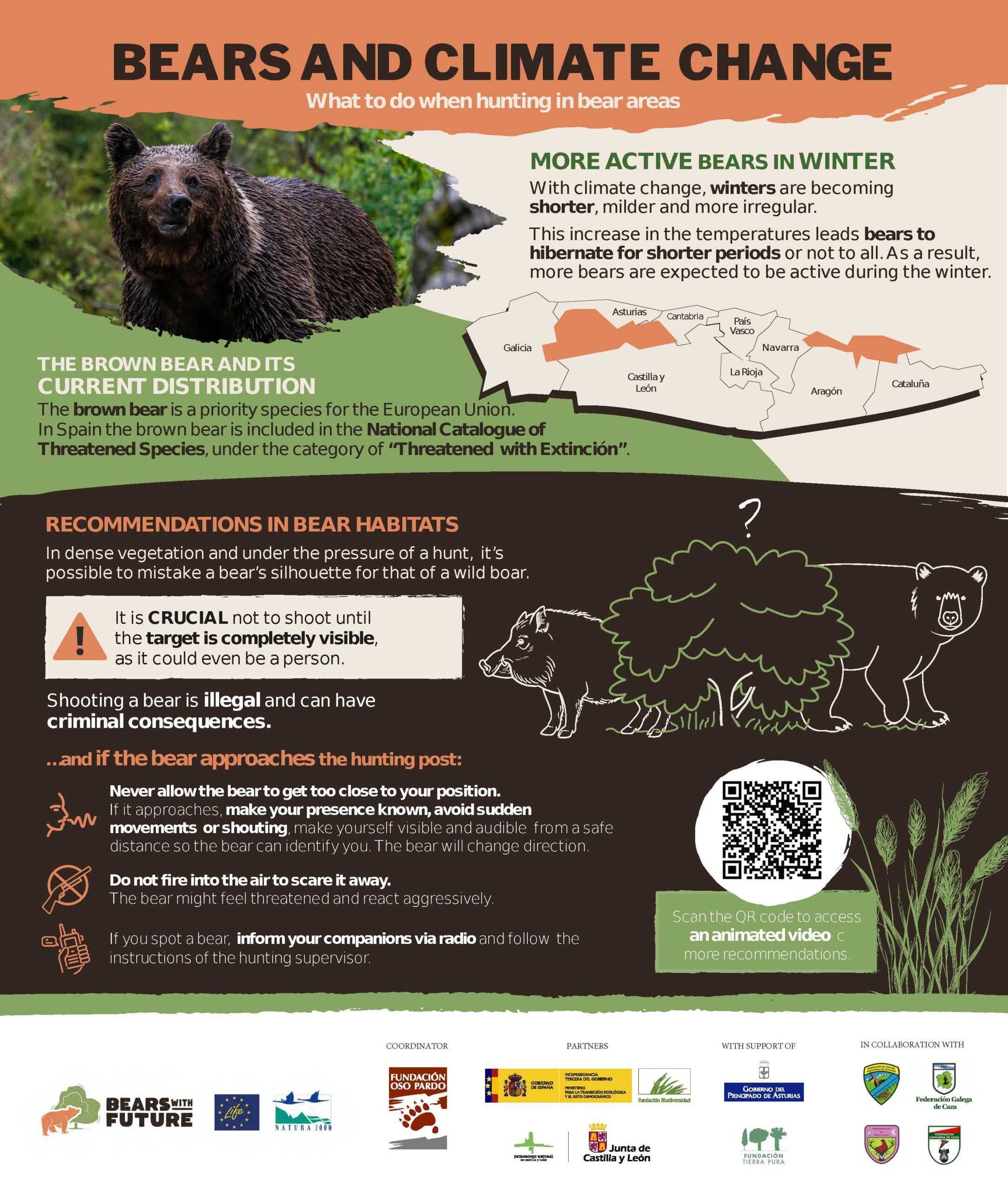
Collaboration agreements have been signed with hunting federations in the Cantabrian autonomous regions and the Foundation for the Management, Development and Conservation of Wildlife and its Habitat (FADEVISA). With their support, an infographic and an animated video for hunters have been produced in Spanish, English and Galician.
PUBLIC INFORMATION CAMPAIGN
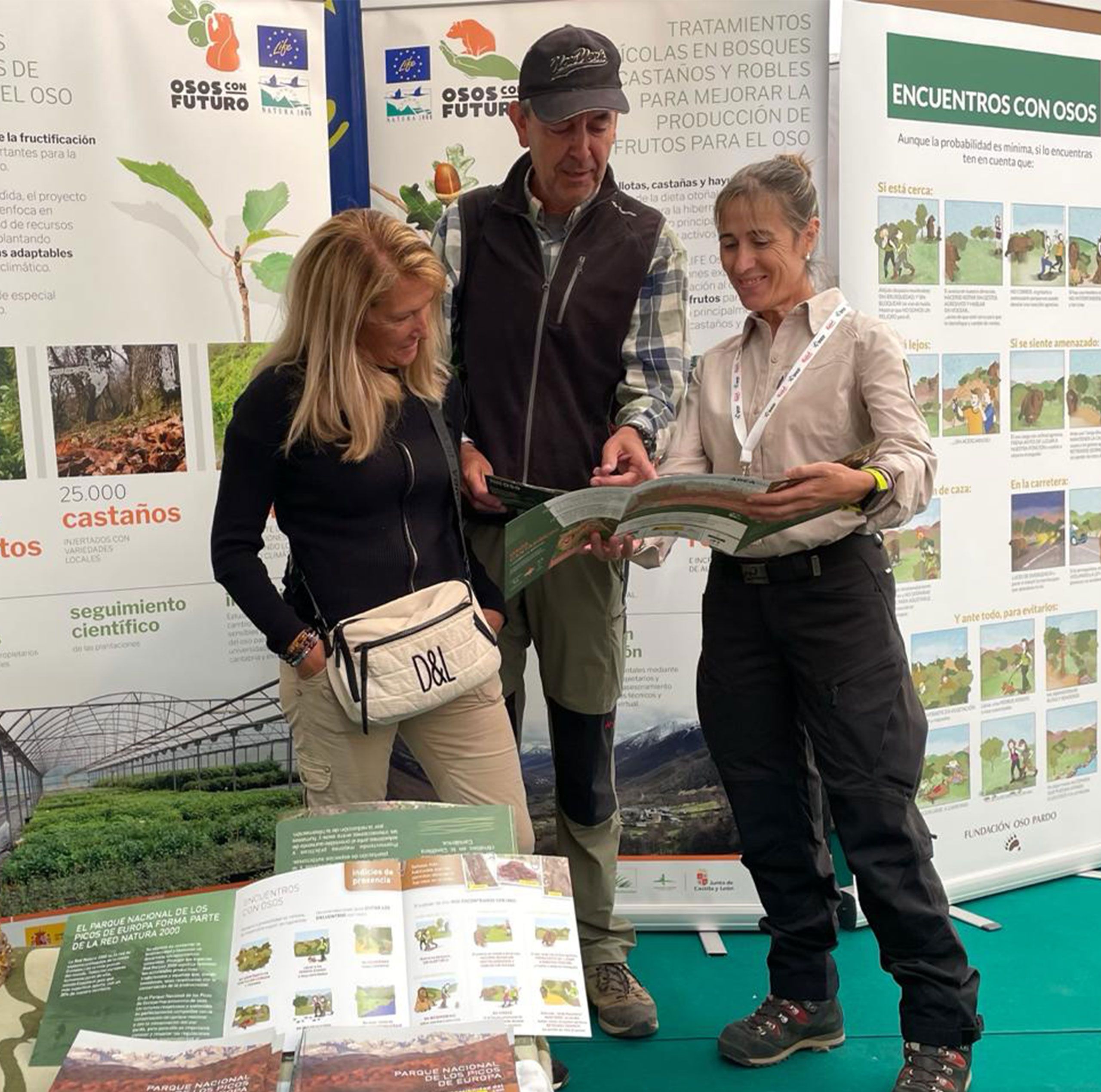
The project places great importance on outreach to the general public. For this reason, it has been present at 7 fairs and events in the Cantabrian mountains, and has permanent information panels in the facilities adjacent to the Valporquero Cave in León and in the Cabárceno Nature Park (Cantabria).
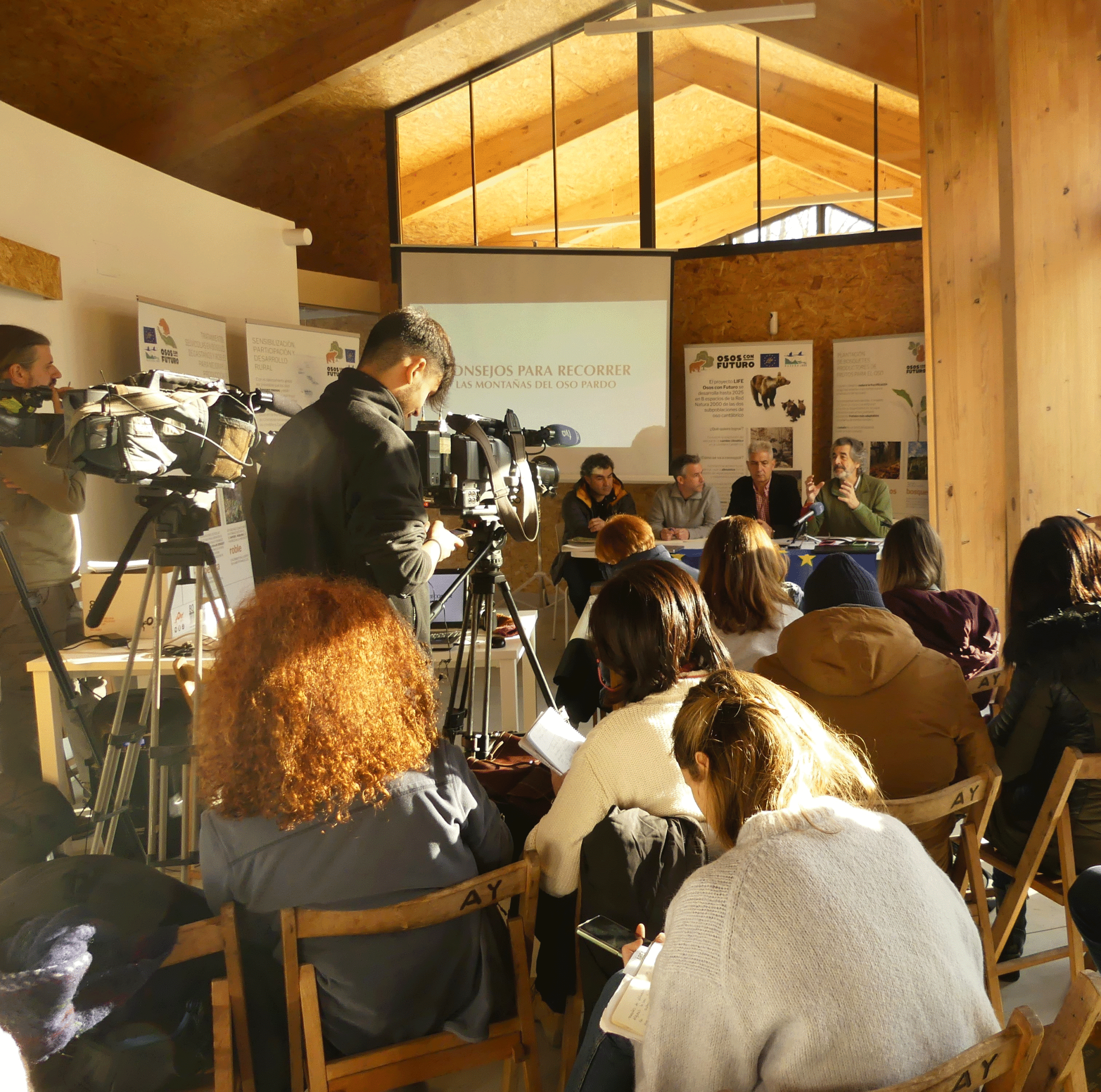
An information brochure has also been produced, and a special progress report has been published in the Quercus Magazine and in specialised nature tourism magazines. A press trip was organised so that journalists from national, regional and local media could learn about the project’s actions first-hand.
A minimum of 340 impacts have been generated in 195 media outlets, and 230 publications on social networks with more than one million reaches.
EXCHANGE OF EXPERIENCES AND SCIENTIFIC AND MANAGEMENT COMMITTEES
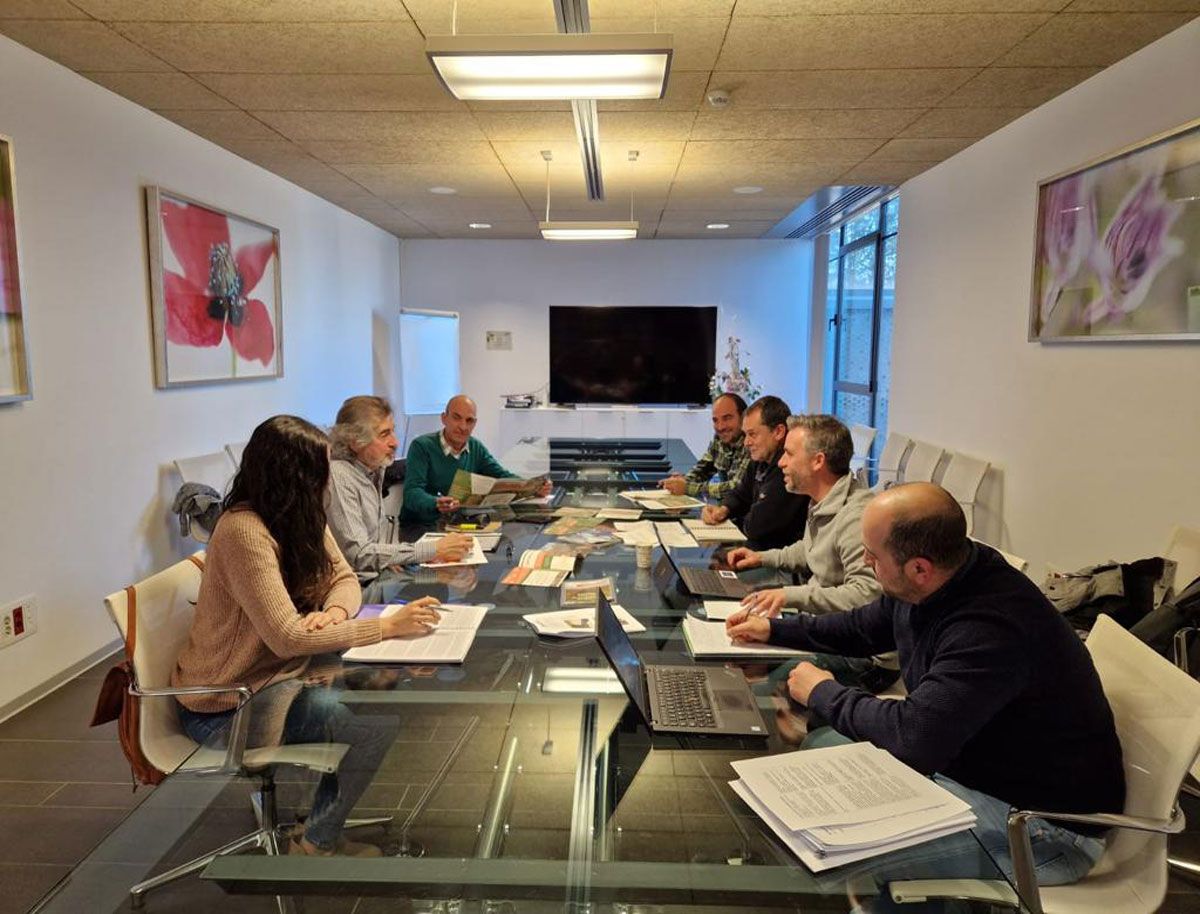
The LIFE BEARS WITH FUTURE technical team has organised or participated in 14 meetings to share experiences and knowledge with international experts and other LIFE projects:
PARTICIPATION IN THE TUSNADECOBEAR INTERNATIONAL CONFERENCE ON HUMAN-BEAR COEXISTENCE IN THE CARPATHIAN MOUNTAINS, ROMANIA.
EXPERIENCE EXCHANGE VISIT WITH THE TECHNICAL TEAMS OF THE LIFE LYNXCONNECT PROJECT. HELD IN LEÓN.
PARTICIPATION IN THE AMYBEAR INTERNATIONAL CONFERENCE IN GREECE.
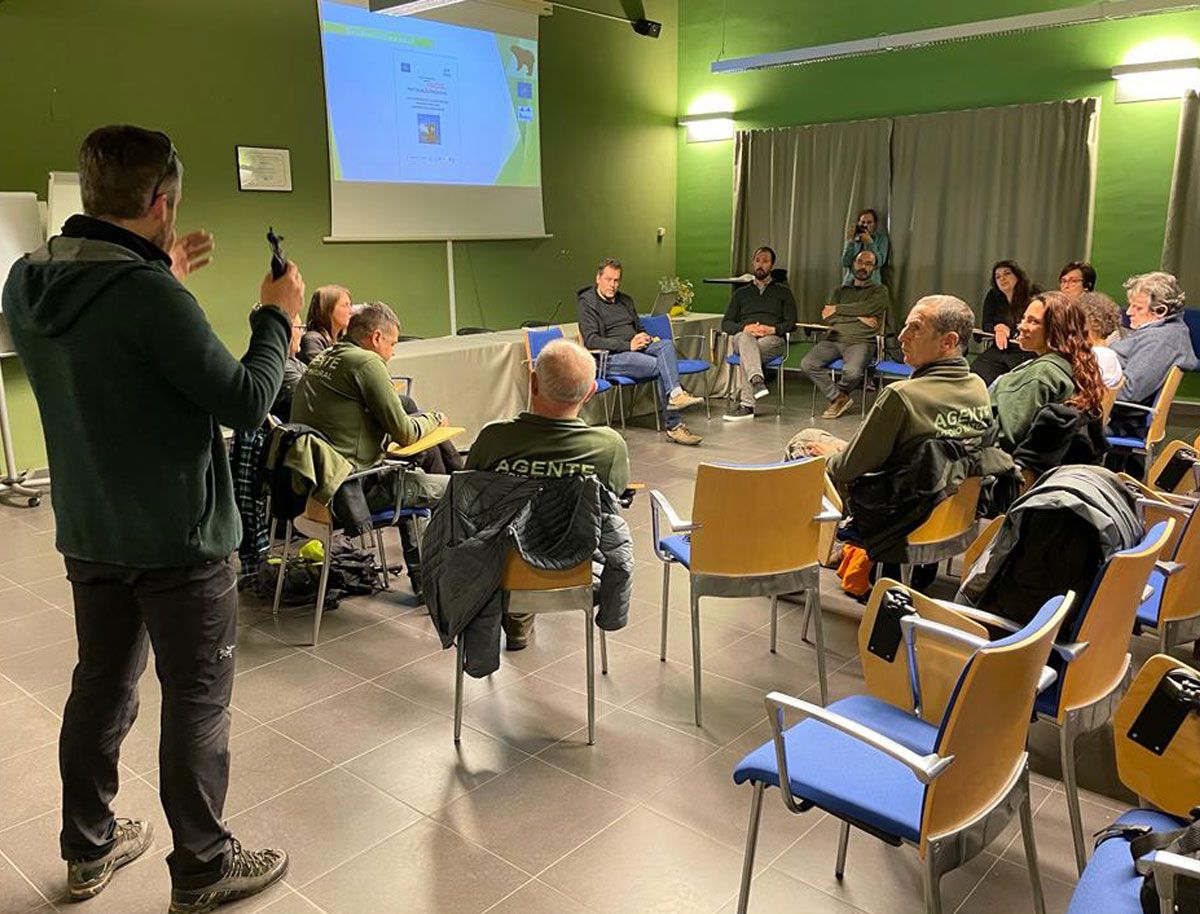
PROJECT ACHIEVEMENTS

RESOURCES AND MATERIALS GENERATED IN THE LIFE BEARS WITH A FUTURE PROJECT:
BROCHURE AND EXHIBITION PANELS:
VIDEOS
↓ Animated video Advice for visiting the mountains of the brown bear
↓ Animated video Advice for visiting the mountains of the brown bear in Spanish
↓ Animated video Advice for visiting the mountains of the brown bear in French
↓ Animated video Advice for visiting the mountains of the brown bear in Italian
↓ Animated video Advice for visiting the mountains of the brown bear in Greek
↓ Animated video Advice for visiting the mountains of the brown bear in Catalan
↓ Animated video Advice for visiting the mountains of the brown bear in Galician
↓ Animated video Good practices for hunting in the brown bear mountains
↓ Animated video Good practices for hunting in the brown bear mountains in Spanish
↓ Animated video Good practices for hunting in the brown bear mountains in Galician
↓ Final video of the Project
INFOGRAPHICS
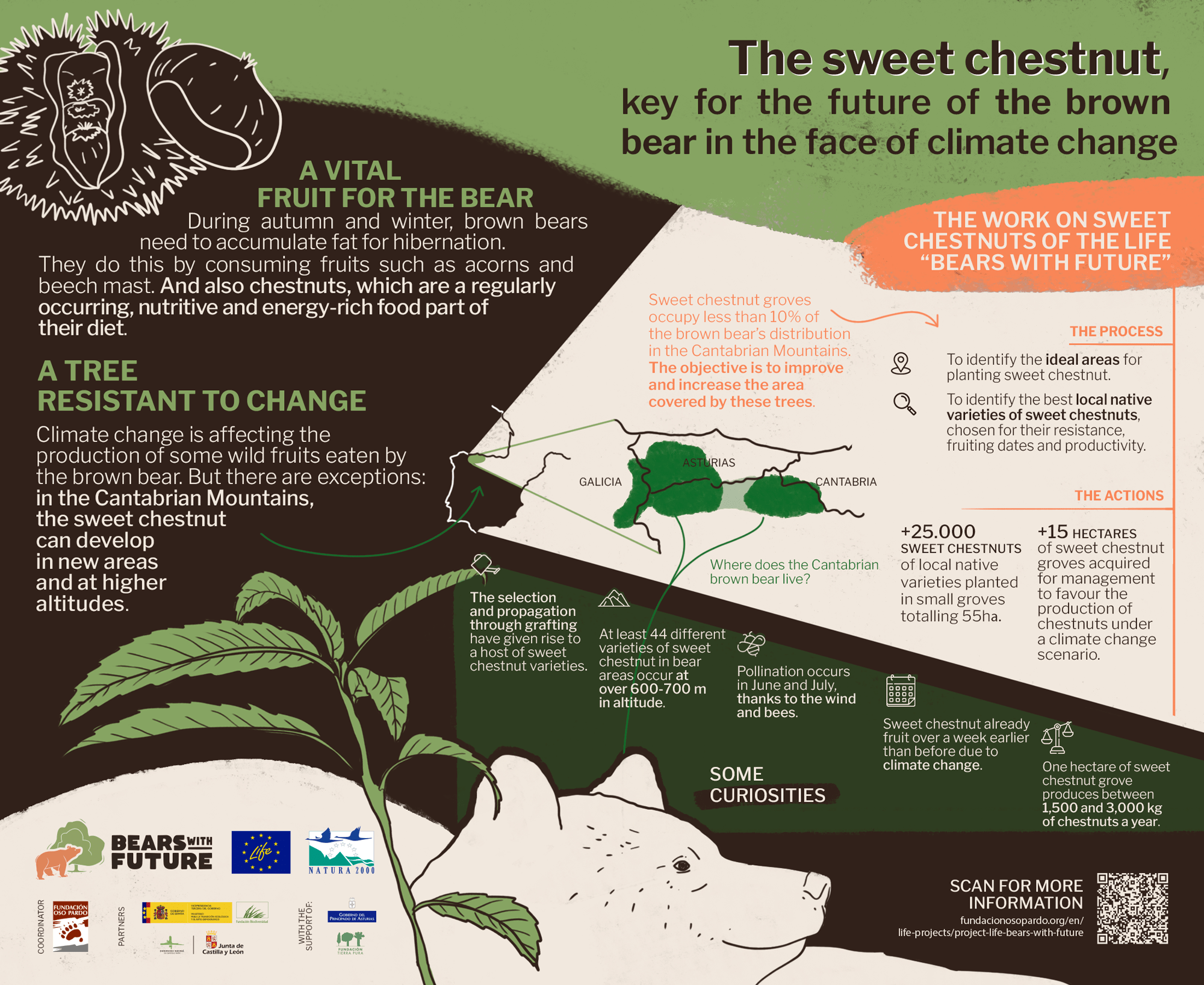
↓ Infographic How to act when practising winter sports in bear areas
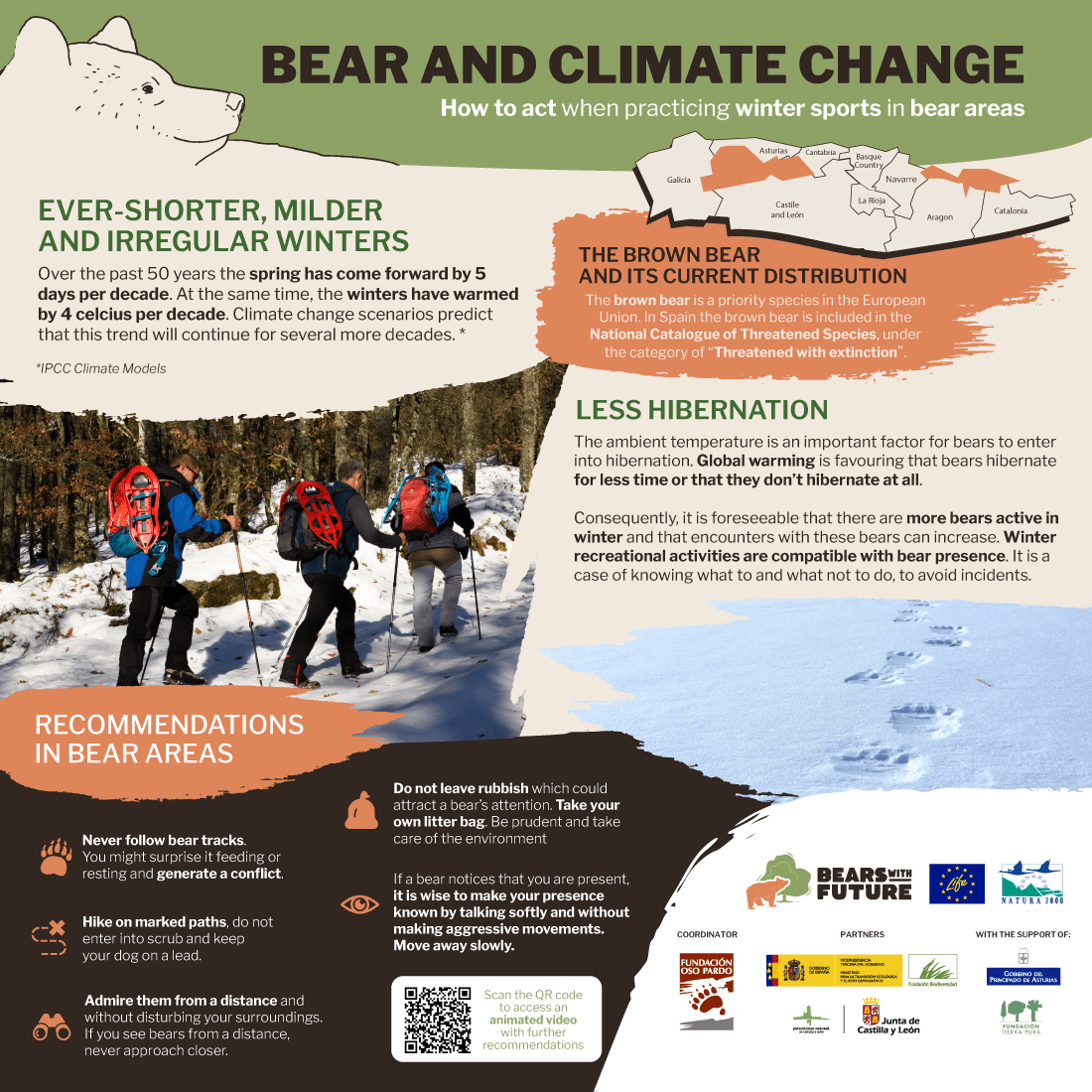
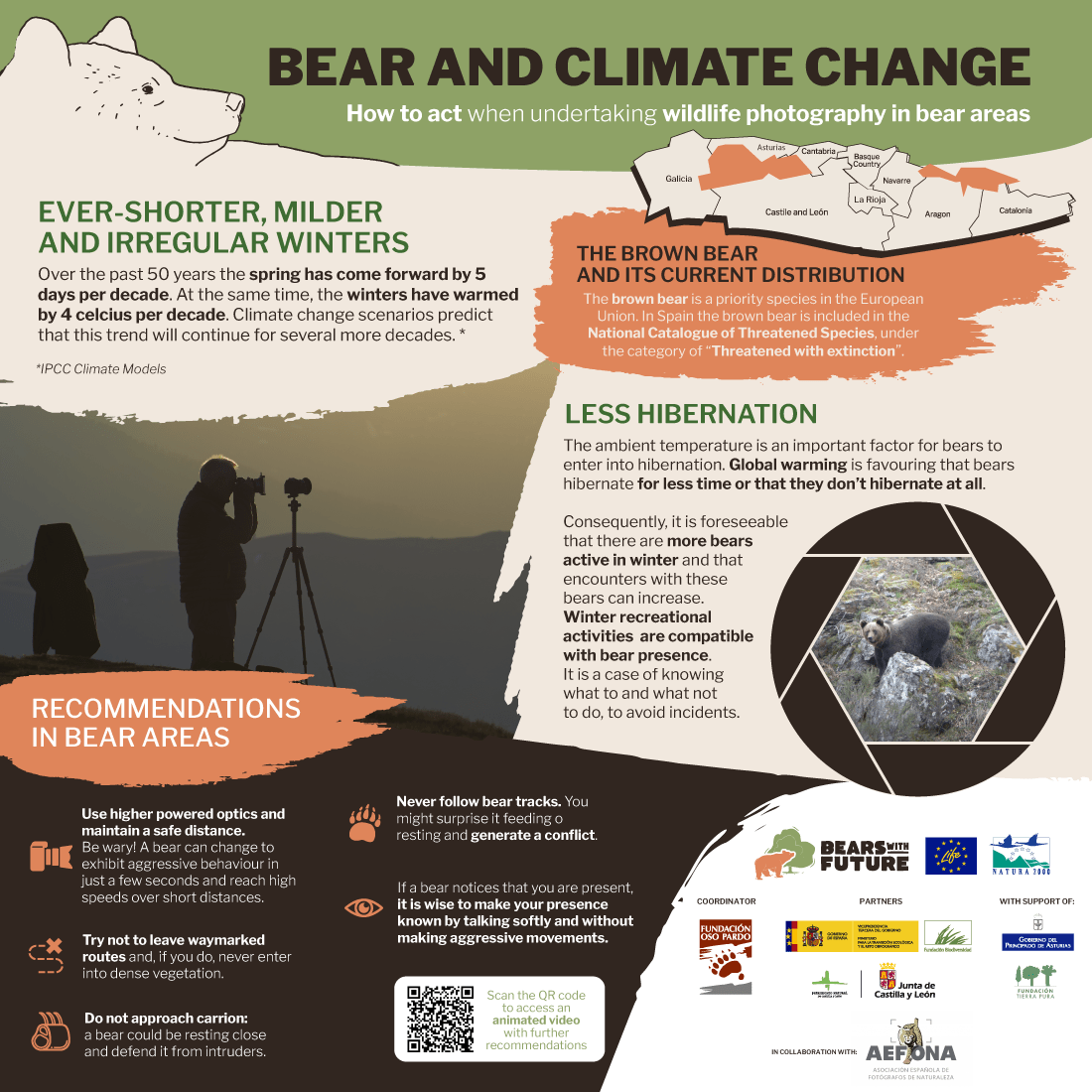
↓ Infographic How to act when undertaking wildlife photography in bear areas

↓ Infographic How to act when fungi collecting in bear areas
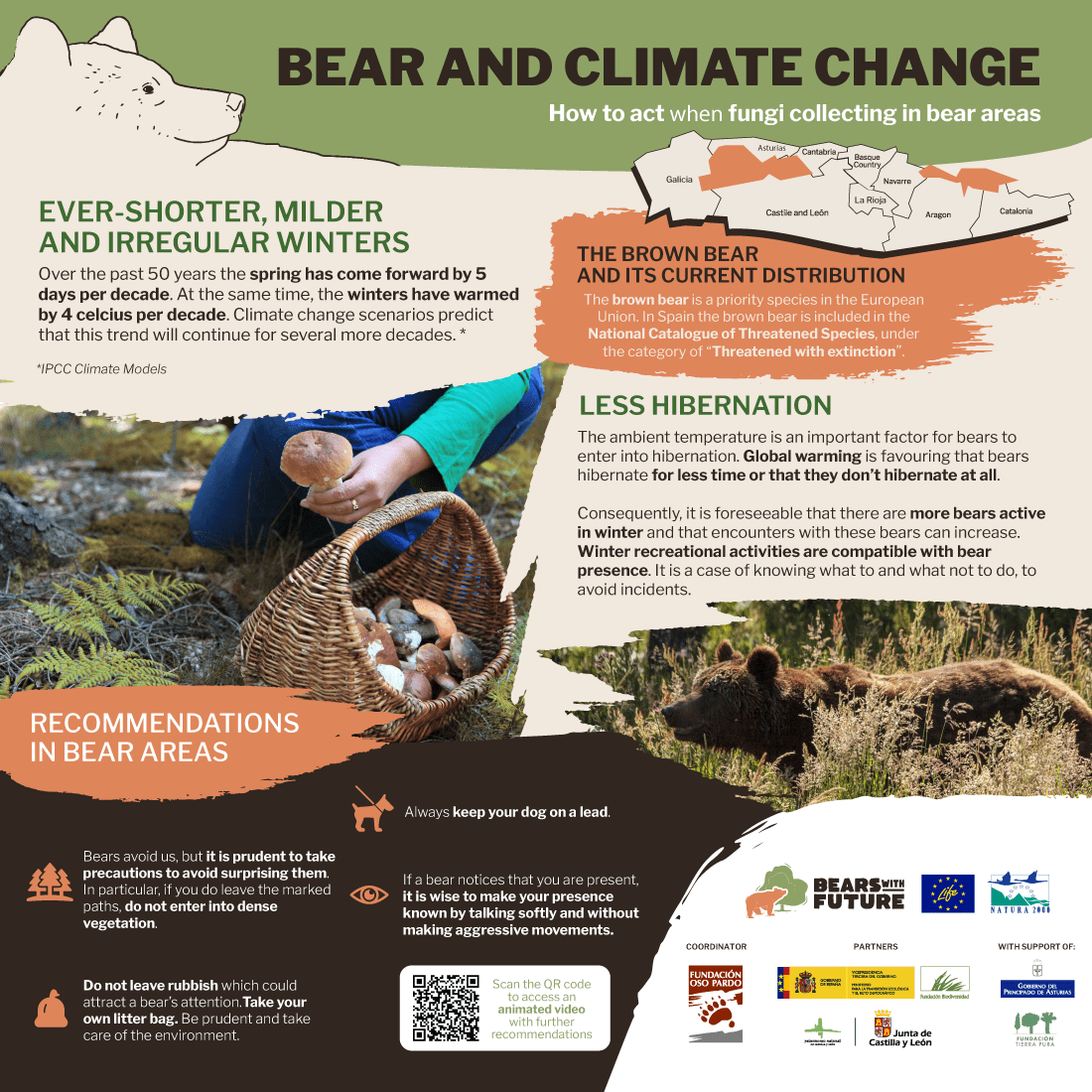
↓ Infographic How to act when hunting in bear areas
↓ Infographic How forest fires affect the mountains where bears live
INFORMATIVE PUBLICATIONS
DOCUMENTS
Fact sheets of the main species producing fruits for bears (Spanish)
Best practices for chestnut grove management (Spanish)
Analysis and evaluation of the production and grafting process of chestnut (Castanea sativa Mill.) plants in nurseries. (Spanish)
Lessons learnt on winter conflicts between humans and bears. (Spanish)
ACKNOWLEDGEMENTS
We are grateful for the support and collaboration of all the entities and organisations that have made this project possible. Their commitment has been fundamental to achieve the objectives
– LIFE19 NAT/ES/000913 –
This website has been made with the contribution of the LIFE Programme of the European Union.
The information included in this website reflects only the view of the LIFE BEARS WITH FUTURE beneficiaries. Neither the European Climate, Infrastructure and Environment Executive Agency (CINEA) nor the European Commission are responsible for any use that may be made of the information it contains.